
BUSINESS
Anmol Industries IPO Sends ₹1,800 Crore to the Family Trust
Anmol Industries filed a ₹1,800 crore IPO that pays only the family trust, repeating a 2018 sale and leaving its plants unfunded.

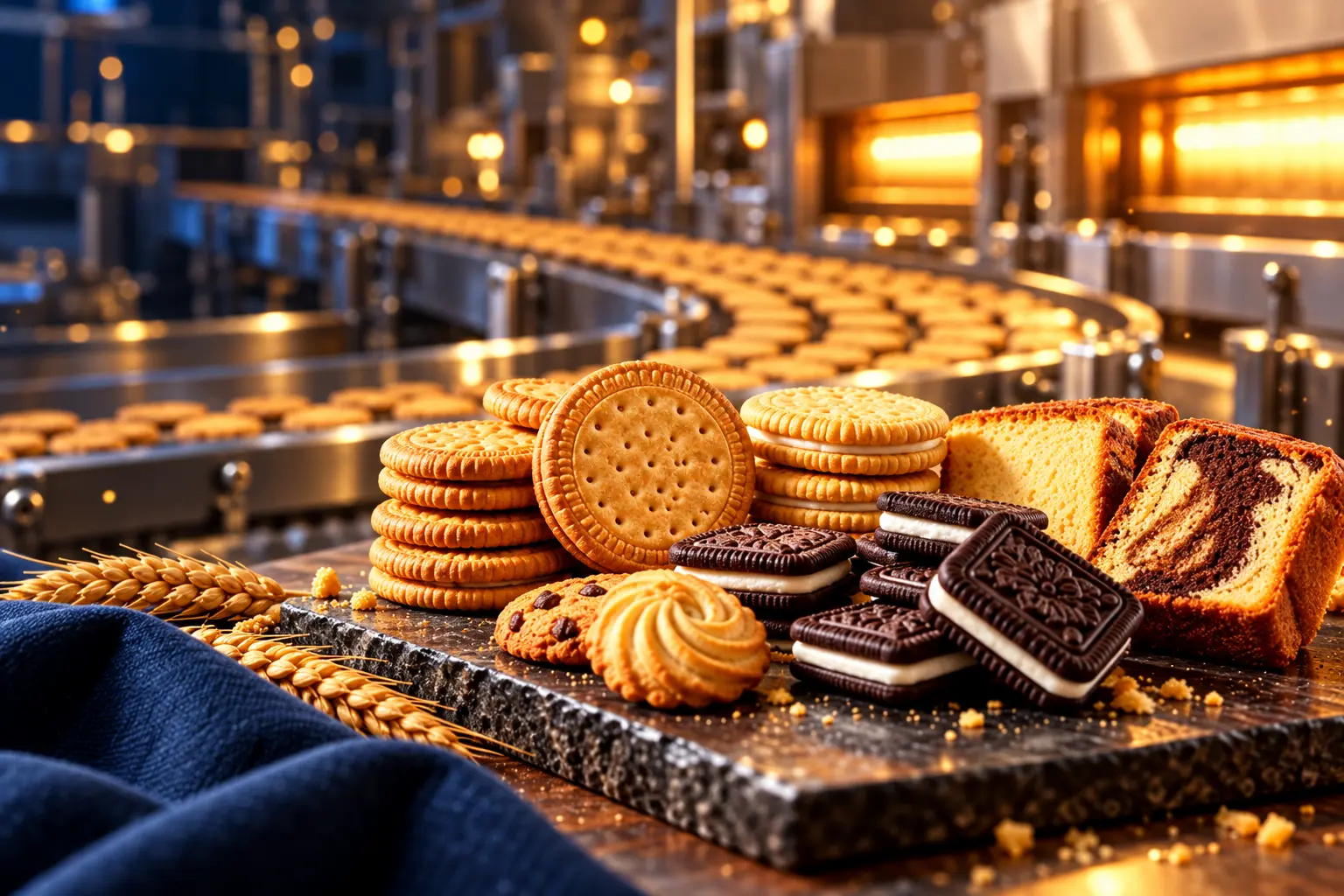
Anmol Industries has filed a ₹1,800 crore IPO that sends every rupee to its promoter trust. The Kolkata biscuit maker will issue no new shares and will take no cash from the sale.
Draft papers reached the Securities and Exchange Board of India on September 25, 2026, for an offer for sale of up to ₹18,000 million ($187.87 million) by Baijnath Choudhary & Family Trust. Face value is ₹5 a share. The trust’s weighted average cost of those shares is ₹0.03 after a split and a 2:1 bonus dated August 21, 2026.
The Trust Sells, the Factories Get Nothing
The draft red herring prospectus lists the fresh issue as not applicable. Risk factor 56 says the company will not receive any part of the proceeds. Qualified institutional buyers may get up to 50% of the net offer, non-institutional bidders at least 15%, and retail individual bidders at least 35%. A slice is reserved for eligible employees, capped at 5% of post-offer capital.
Intensive Fiscal Services, ICICI Securities and IIFL Capital Services are the book-running lead managers. MUFG Intime India is the registrar. Shares are proposed to list on BSE and NSE. Khaitan & Co said on September 29, 2026 that it advised those managers on the filing.
Promoters together hold 297,411,606 shares, or 90.44% of the paid-up capital, according to the draft. After the sale they will still hold a controlling block. The public is being asked to buy into a biscuit company whose plants, brands and working capital will not see a rupee from the issue.
Eight Years Later, the Same Exit Play
This is the second time the Choudharys have tried to list Anmol, and the structure has not changed. In June 2018 the company filed papers for an offer for sale of up to ₹750 crore. SEBI cleared that issue in September 2018. The company then said it wanted to diversify into southern and western markets. The shares never listed.
The 2018 sale was already a cash-out. Baijnath Choudhary & Family Trust was to sell ₹720.4 crore of stock. SKG Land Developers LLP, Delta Nirman LLP, Anmol Hi-Cool LLP and Puneet Mercantiles LLP made up the rest. Face value then was ₹10. Edelweiss Financial Services, ICICI Securities and Motilal Oswal Investment Advisors ran the books. For 2016-17 the firm had reported total income of ₹1,240 crore and profit of about ₹72 crore.
FROM THE FIRST FILING TO THIS ONE
- November 19, 2009: The company is incorporated in Kolkata as Bansal Biscuits Private Limited.
- May 23, 2016: The name changes to Anmol Industries Private Limited; it becomes a public company on March 30, 2017, after a merger with Anmol Biscuits Limited.
- June 19, 2018: A draft prospectus is filed for a ₹750 crore offer for sale.
- September 24, 2018: SEBI approval is announced; the listing is later dropped.
- November 7, 2025: The National Company Law Tribunal, Kolkata Bench, approves a merger of Anmol Projects Private Limited and Monarch Shelter Private Limited into the company.
- September 25, 2026: A new draft is filed for a ₹1,800 crore offer for sale, 2.4 times the 2018 size, still with no fresh issue.
The 2018 papers talked about visibility, brand and liquidity for existing holders. Those are still the honest objects of this offer. What has changed is the cheque.
Profit Fell, Then Jumped Fivefold
The five-fold profit line that travelled with the filing is a rebound, not a straight climb. Restated figures in the draft show profit after tax falling from ₹126.21 crore in fiscal 2024 to ₹38.12 crore in fiscal 2025, a drop of 70%, before recovering to ₹190.9 crore in fiscal 2026. That recovery is five times the fiscal 2025 figure.
Revenue from operations rose through the dip: ₹1,422.90 crore in fiscal 2024, ₹1,640.90 crore in fiscal 2025, and ₹2,101.8 crore in fiscal 2026, up 28% on the year. Cost of materials consumed jumped to 70.80% of revenue in fiscal 2025, from 61.40% the year before, then eased to 64.48% in fiscal 2026. Biscuits and cookies still supplied 93.74% of product sales in fiscal 2026.
RESTATED RESULTS IN THE DRAFT
| Fiscal year ended March 31 | Revenue from operations | Profit after tax | Materials cost / revenue |
|---|---|---|---|
| 2024 | ₹1,422.90 crore | ₹126.21 crore | 61.40% |
| 2025 | ₹1,640.90 crore | ₹38.12 crore | 70.80% |
| 2026 | ₹2,101.8 crore | ₹190.9 crore | 64.48% |
ICRA reaffirmed a long-term rating of AA- with a stable outlook on April 9, 2026. In that note, the operating margin recovered to 11.5% in the first nine months of fiscal 2026, after 4.2% in fiscal 2025 and 11.2% in fiscal 2024. Volume was up about 12% and realisations about 13% in that nine-month stretch, ICRA said, with demand coming back in rural and semi-urban biscuit markets.
A one-year profit snap-back off a materials spike is a weaker base than a five-year climb. Anyone buying the stock is underwriting that the 2026 margin holds, without new IPO cash to cushion the next wheat or palm-oil jump.
Bihar, Odisha, Bengal and Jharkhand Still Pay the Bills
Anmol’s own risk section says “core markets” of Bihar, Odisha, West Bengal and Jharkhand contributed 67.70% of product sales in fiscal 2026, 67.53% in fiscal 2025 and 65.94% in fiscal 2024. The south-west push advertised in 2018 has not rewritten the P&L.
Frost & Sullivan, paid by the company for the industry chapter in the draft, still ranks Anmol as the fourth-largest biscuits brand in India by sales value in fiscal 2026 and the sixth-largest cake brand. Revenue compounded at 21.54% from fiscal 2024 to fiscal 2026, the fastest among listed peers in that report. A copy sits with the Frost & Sullivan biscuit industry report on the company’s investor pages.
WHERE THE BRAND IS STRONG
- Eastern India: Third-largest biscuits and cookies player, with an 11% to 14% share by sales value in fiscal 2026.
- Bihar: Second-largest organised biscuits and cookies player, with an 18% to 20% share.
- Odisha: Second-largest organised player, with a 13% to 15% share.
- Regional rank: Largest biscuits brand excluding the national names, by sales value in fiscal 2026.
Products reached 4,266 pin codes across 24 states and two Union Territories as of March 31, 2026, and about 2.10 million retail outlets. The network had 1,005 direct distributors, 3,533 sub-distributors and 444 super stockists. Exports went to 31 countries over the last three fiscals. That is a national map with an eastern centre of gravity.
The portfolio runs to 70 brands and 188 SKUs, including 159 biscuits and cookies, 21 cakes and eight other lines. Dream Lite alone generated more than ₹600 crore in fiscal 2026. Family packs priced above ₹10 supplied 23.85% of product sales, or ₹485.5 crore. Multi Grain and Top Royale, two of 18 launches across three years, added ₹29.6 crore and ₹25.5 crore. The company is still, at heart, a biscuit house.
Seven Plants Still Run Below Full Tilt
The draft lists seven factories: Greater Noida and Ghaziabad in Uttar Pradesh, Hajipur and Thakurganj in Bihar, Dankuni and Begampur in West Bengal, and Bhubaneswar in Odisha. The Dankuni site dates to 1994 under the old holding company. As of March 31, 2026 there were nine depots; a Sambalpur depot in Odisha was added later, and the Jaipur depot was being shuffled.
Installed biscuit and cookie capacity was 360,965 tonnes a year. Cake capacity was 16,372 tonnes. In fiscal 2026 those lines ran at 57.63% and 34.44% of available capacity. Under-use is written up as a risk in the draft, because idle ovens still cost money. It is also the fact that sits least comfortably next to a promoter sale: the company is not short of kilns in the way a typical expansion IPO implies.
CAPACITY VERSUS USE, FISCAL 2026
| Line | Installed capacity | Capacity use |
|---|---|---|
| Biscuits and cookies | 360,965 tonnes a year | 57.63% |
| Cakes | 16,372 tonnes a year | 34.44% |
ICRA had already flagged the Thakurganj plant in Bihar, commissioned in March 2024 with 60,600 tonnes of added capacity. The group can raise output from assets it already owns if demand in the west and south finally arrives. It does not need this IPO to pour a slab.
How the ₹1,800 Crore Offer Is Split
Price band, share count and bid dates are still blank in the draft. The offer is being made under Regulation 6(1) of the SEBI ICDR Regulations, through book building, with an anchor window the company may open the day before the issue. Until SEBI clears the papers and a red herring is filed with the Registrar of Companies, none of those blanks can be filled.
WHAT WE KNOW
- The seller: Baijnath Choudhary & Family Trust is the only selling shareholder.
- The cash path: Net proceeds go to the trust after expenses and tax; the company gets none.
- The allocation: Up to 50% of the net offer for institutions, at least 15% for non-institutional bidders, at least 35% for retail, plus an employee portion.
- The books: Fiscal 2026 revenue ₹2,101.8 crore and profit ₹190.9 crore, after a 70% profit drop in fiscal 2025.
WHAT IS UNCONFIRMED
- The price: Floor, cap and final offer price are not set.
- The size in shares: The number of equity shares on offer is still a placeholder.
- The calendar: Bid opening, closing and listing dates have not been announced.
- The public float: Post-offer promoter and public percentages depend on the price and on how many shares the trust actually sells.
Retail buyers who treat “IPO” as shorthand for growth capital will be buying the opposite product: a secondary sale that prices a family holding and leaves the balance sheet unchanged.
Control Stays With the Family After Listing
The promoter group named in the draft is the trust plus Biswanath, Dilip Kumar, Gobind Ram, Bimal Kumar, Vikash, Sunil, Deepak, Ankit, Ashish, Aman and Keshav Choudhary. Biswanath Choudhary is chairman. Bimal Kumar Choudhary is managing director. Gobind Ram Choudhary is a whole-time director. The filing is explicit that this block will still run the company after listing.
The Offer comprises only an Offer for Sale by the Promoter Selling Shareholder. The Promoter Selling Shareholder will receive the entire proceeds from the Offer for Sale (after deducting applicable Offer expenses) and our Company will not receive any part of the proceeds of the Offer for Sale.
Anmol Industries, Draft Red Herring Prospectus, September 2026
Founder Baijnath Choudhary is dead; the 30-year brand note on the company site still credits him. The trust that bears his name is now the vehicle for the exit. SEBI will read the draft, ask its questions, and decide whether a public book can open on these terms. The ovens in Dankuni, Hajipur and Greater Noida will keep running on the same capital they had the day before the papers were filed.
Disclaimer: This article is news reporting and analysis of a draft offer document, not a recommendation to bid in the Anmol Industries IPO or to buy or sell any security. It does not constitute investment, tax or legal advice, and it does not assess whether the shares are fairly priced, because no price band has been set. Readers should read the full draft red herring prospectus, any later red herring and prospectus, and SEBI’s observations, and should consult a SEBI-registered investment adviser or a qualified financial planner before applying for shares or making any related decision. Figures, shareholding, ratings and offer terms are those stated in the cited filings and rating note as of their dates and may change before listing, if listing occurs.

Chinese Design Booms While Luxury Spending in China Falls

Abbott Spins Off Nutrition After Formula Legal Bills

French Law and Two Unions Hold Arkane Lyon’s Clock

FSSAI Brings a 1992 Formula Ban Onto Instagram Reels

Capcom ID Leak Hands Attackers a Ready Phishing Kit

The Last Manual V-12 Lamborghini Cannot Come to America

Permafrost Thaw Runs Fastest in Mountains, Not Arctic Soils

Rune Bets on Hillerød for His Achilles Comeback

The Roman Space Telescope Flies After Four Budget Fights

JBS’s Pilgrim’s Pride Bid Still Needs the 18 Percent
-
 AUTO2 months ago
The Last Manual V-12 Lamborghini Cannot Come to America
-
 NEWS2 months ago
Permafrost Thaw Runs Fastest in Mountains, Not Arctic Soils
-
 NEWS2 months ago
Rune Bets on Hillerød for His Achilles Comeback
-
 NEWS2 months ago
The Roman Space Telescope Flies After Four Budget Fights
-
 BUSINESS2 months ago
JBS’s Pilgrim’s Pride Bid Still Needs the 18 Percent
-

 NEWS2 months ago
Murphy Defends a British Open Title Nobody Keeps
-

 BUSINESS2 months ago
Software Stocks Rally as Underweight Funds Face Dreamforce
-

 BUSINESS2 months ago
Rubicon Research Q1 Tests Its Specialty Pharma Bet