
BUSINESS
Abbott Spins Off Nutrition After Formula Legal Bills
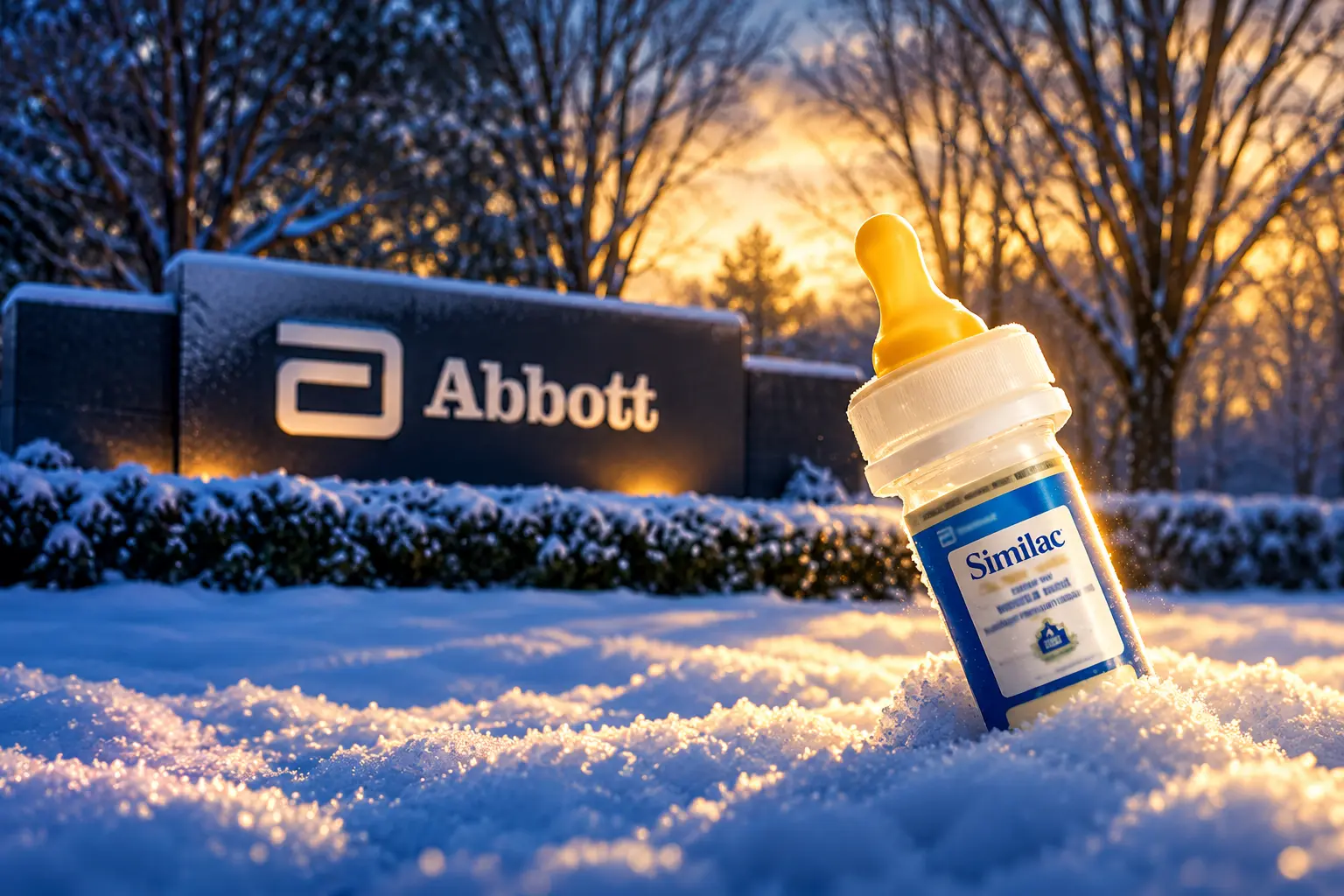
Abbott will spin Similac and Ensure into a separate company by the end of 2027 after formula settlements that left thousands of claims open.

Abbott will spin its $8.5 billion nutrition business, including Similac, into a separate public company by the end of 2027. The Illinois healthcare group said on October 21 that shareholders would receive stock in both firms through a tax-free split.
Daniel Salvadori, who already runs nutrition and established medicines, will be chief executive of the still-unnamed company. The move follows two formula settlements this year and leaves thousands of preterm-formula claims unresolved.
A Tax-Free Split by the End of 2027
Abbott filed the plan the same morning it posted third-quarter results. The nutrition company would take Similac, PediaSure, Pedialyte, Glucerna and Ensure, about 16,000 people, and 14 plants. Remaining Abbott would keep medical devices, diagnostics and established medicines, with about $42 billion in sales and about 106,000 employees.
Chairman and chief executive Robert B. Ford said the businesses have “different investment identities and requirements, growth profiles, and innovation cycles.” He also said nutrition has “a unique opportunity to capitalize on the growing demand for healthy nutrition,” and that a standalone firm could aim its money at its own priorities.
Abbott intends the deal as a tax-free distribution to shareholders. The combined dividend from Abbott and the new company is supposed to match Abbott’s dividend at the split. Completion is expected by the end of 2027, after regulatory approvals, an effective Form 10 registration statement, and a final vote by Abbott’s board. Goldman Sachs & Co. LLC is the financial adviser; Wachtell, Lipton, Rosen & Katz is legal counsel. One-time charges will be quantified later. Nutrition stays inside Abbott until the split is done, and Abbott said the plan does not change 2026 guidance or the 2027 outlook due in January.
FROM STURGIS TO A SEPARATE TICKER
- 2022: Abbott shuts its Sturgis, Michigan, powder plant and recalls selected Similac, Alimentum and EleCare formulas, setting off a national shortage.
- July 2024: A St. Louis jury awards $495 million in Gill, a preterm-formula necrotizing enterocolitis case.
- August 20, 2026: Abbott agrees to pay about $670 million to resolve Gill and claims for about 2,000 other infants.
- September 14, 2026: Abbott agrees to pay $384,999,040 to resolve federal and state False Claims Act allegations tied to powder formula made at Sturgis and Casa Grande, Arizona.
- October 21, 2026: Abbott says it will separate nutrition into an independent public company by the end of 2027.
The company now employs about 122,000 people in more than 160 countries. Nutrition is a slice of that workforce and of sales, not the growth engine Ford is selling to investors.
Sturgis, Casa Grande and a Federal Settlement
On September 14, the Justice Department announced a settlement over contaminated infant formula totaling $384,999,040. Abbott will pay $348,700,868 to the United States and $36,298,172 to states in Medicaid and WIC programs. The claims cover powder infant formula and nutritional therapy products made from January 1, 2018, through December 31, 2022, at Sturgis and at Casa Grande. Abbott did not admit liability. The Justice Department said the claims are allegations only.
Three former Abbott employees who brought the whistleblower case, Scott Millard, Kristine Cooper and Loren Cooper, will receive $69 million of the federal recovery. The United States had filed a complaint in intervention on November 13, 2025, in the Western District of Michigan.
WHAT THE COMPLAINT ALLEGED
- Roof leaks: Water ran and dripped over equipment at Sturgis, and Abbott used temporary “roof leak umbrellas” instead of a lasting fix, the complaint said.
- Spray dryers: Abbott kept running dryers after documenting cracks and pits, which raised the risk of contamination when moisture was present, according to the department.
- Cleaning cycles: The complaint said Abbott lengthened the number of batches between cleanings to raise output.
- Testing: Prosecutors alleged Abbott avoided some bacterial testing and, in some cases, failed to disclose positive results during FDA inspections in 2019 and 2022.
More than half of all infant formula bought in the United States is paid for with USDA money through WIC, the department said. That is the channel the alleged false claims ran through. Acting Deputy Attorney General Trent McCotter tied the dollar figure to that supply line.
Today’s settlement is a victory for American families and makes clear the safety of our children is not negotiable.
Trent McCotter, Acting Deputy Attorney General, Justice Department statement, September 14, 2026
The 2022 shutdown and recall emptied shelves nationwide. The civil deal closes the government’s false-claims case. It does not decide the private suits that still sit on Abbott’s docket.
$670 Million Left 1,700 Lawsuits Standing
On August 20, Abbott said it had reached agreements with three law firms to resolve a portion of NEC claims involving specialty formulas for preterm infants. The package covers the Gill case and claims for about 2,000 other infants for an aggregate of approximately $670 million.
Abbott had appealed the $495 million Gill verdict. Paying the judgment plus interest would have been about $600 million, the company said, so it folded that case into the wider deal. It called the agreements a compromise of disputed claims and not an admission of liability. It said the Food and Drug Administration, National Institutes of Health, Centers for Disease Control and Prevention, American Academy of Pediatrics and the NEC Society recognize preterm formulas as safe and necessary, and that there is no reliable scientific evidence they cause necrotizing enterocolitis, or NEC.
After those agreements, Abbott said there were roughly 1,700 lawsuits still pending in federal and state courts, involving claims on behalf of about 12,700 individual infants. That count, the company said, includes people who named both Abbott and Mead Johnson without saying which formula was used, infants diagnosed with NEC before any formula, people never diagnosed with NEC, and names that appear in more than one case. There is no global settlement.
WHAT WE KNOW
- Partial deal: The August agreements cover Gill and about 2,000 other infants, not the rest of the docket.
- Abbott’s science line: The company says cow’s-milk preterm formula does not cause NEC and that it is one of only two U.S. makers of these hospital products.
- Federal wins: Abbott said it had victories in all three federal multidistrict-litigation bellwether cases, including a Seventh Circuit ruling in July 2026 that affirmed a pretrial judgment in its favor.
WHAT IS UNCONFIRMED
- Who pays after 2027: The October 21 statement does not say whether leftover NEC cases, or any related debt, stay with Abbott or move to the new nutrition company.
- A global deal: No court-approved settlement program has been announced for the remaining infants.
- The new ticker’s capital structure: Abbott has not said how much cash, debt or litigation reserves the spinco would carry.
That last gap is the live one for anyone who will own the new shares. The announcement reads like a growth story. It does not say who holds the remaining claims.
U.S. Pediatric Sales Are Still Down for the Year
Nutrition did not look like a collapsing unit in the third quarter. Worldwide nutrition sales were $2.262 billion, up 5.1% as reported and 4.9% on a comparable basis, according to Abbott’s third-quarter nutrition sales tables. Worldwide pediatric sales rose 8.8%, and U.S. pediatric sales rose 11.0% to $577 million. Adult nutrition rose 2.0% to $1.199 billion. Sales were $118 million higher than in the second quarter.
The nine-month record is weaker, and that is the stretch investors still have to underwrite. Nutrition sales were $6.423 billion, down 1.3% as reported and 2.1% on a comparable basis. U.S. nutrition fell 4.5%. U.S. pediatric sales, the Similac-heavy line, fell 4.8% to $1.613 billion.
NINE-MONTH 2026 SALES BY SEGMENT
| Segment | Sales ($ millions) | Reported change |
|---|---|---|
| Nutrition | 6,423 | -1.3% |
| Medical devices | 17,218 | +9.6% |
| Diagnostics | 8,577 | +32.4% |
| Established pharmaceuticals | 4,539 | +9.3% |
Group sales for the nine months were $36.770 billion, up 11.9%. Operating earnings fell 24.2% to $4.39 billion, and net earnings fell 38.4% to $2.92 billion, after litigation costs and deal-related expenses. In the third quarter alone, sales were $13.013 billion, up 14.5% as reported and 7.0% on a comparable basis. GAAP diluted earnings were $0.53; adjusted diluted earnings were $1.42. Full-year comparable sales growth is now projected at about 6.0%, and adjusted diluted EPS guidance was tightened to $5.50 to $5.55.
Diagnostics jumped because Abbott closed its Exact Sciences purchase on March 23, 2026, adding Cologuard. Medical devices still supplied $5.826 billion in the third quarter, up 6.9%. Nutrition is the segment whose nine-month line is negative, even after a stronger quarter and a list of new SKUs.
What the Standalone Company Inherits
The new company, Abbott said, will be a global nutrition firm with about $8.5 billion in annual sales and brands that already lead their categories. Abbott calls Ensure the world’s No. 1 adult nutrition supplement drink, PediaSure the world’s No. 1 pediatric nutrition supplement, Glucerna the world’s No. 1 diabetes-management nutrition brand, and Similac the No. 1 infant formula brand in the United States. Pedialyte sits beside them as the rehydration label.
Those brands are not a museum set. Abbott said nutrition launched 10 products in the first half of 2026, including an Ensure shake with 42 grams of protein, dye-free Pedialyte, and Similac 360 Total Care Made With Whole Milk, which it calls the first commercially sterile ready-to-feed liquid infant formula made with whole milk sold in the United States. The earnings release repeated that launch as a third-quarter highlight.
What the spinco does not yet have is a name, a headquarters, a disclosed debt load, or a stated plan for the leftover NEC docket. Salvadori joined Abbott in 2014, led established medicines in Latin America, then nutritional products, and took his current group-president job in 2021. Before Abbott he worked at CFR Pharmaceuticals and Sandoz. He will run a company whose U.S. pediatric line is still down for the year, whose largest U.S. formula brand sits inside a market where WIC pays for more than half of purchases, and whose hospital preterm formulas remain in active litigation.
About 1 in 10 U.S. infants is born preterm, Abbott said, citing CDC figures, and it is one of only two companies here that make the specialty formulas those NICUs use when human milk is short. That is a public-health role as much as a product line. A smaller parent with 14 plants will hold it without Abbott’s device cash flow sitting in the next column of the same 10-K.
16,000 People, 14 Plants and No New Name Yet
The people count is not a rounding error. About 16,000 employees would leave with nutrition; about 106,000 would stay. The plants include the Sturgis site that defined the 2022 shortage and the Casa Grande site named in the federal complaint. Abbott said the new company would have scale in developed and emerging markets and would chase metabolic health, prevention and wellness, the same consumer language Ford used for “healthy nutrition.”
Independent nutrition companies can spend on those trends. They also fund plants, recalls, and lawsuits from their own balance sheet. Abbott did not say how much working capital, how many WIC state contracts, or which legal reserves move across the line. Until a Form 10 is on file, those are blanks.
Holders who remember the 2013 AbbVie split are already treating the dividend sentence as the binding one: the two checks should add up to today’s Abbott dividend when the deal closes. That is a payout promise, not a litigation plan.
The Remaining Abbott Keeps Devices, Diagnostics and Medicines
After the split, Abbott said it would still be one of the largest healthcare companies, with market-leading positions in cardiovascular and neuromodulation devices, biowearables, laboratory, point-of-care and cancer diagnostics, and established medicines. Third-quarter product news sat on that side of the house: FDA approval for Libre Duo, a dual glucose-ketone sensor; a CE mark for the Amulet 360 left-atrial-appendage occluder; FDA approval for the TactiFlex Duo ablation catheter; and the SimpleScreen CRC blood test.
That is the company Ford is asking the market to value on its own. Nutrition, including the formula aisle that ran short in 2022, becomes someone else’s ticker by the end of 2027 if the board, regulators and the tax ruling all cooperate. Salvadori would then be the public face of Similac, Ensure and the plants that make them, including the two named in the federal settlement, while Abbott’s remaining books show devices, diagnostics and medicines.
The October 21 filing does not assign the remaining 1,700 lawsuits. It assigns the brands, the headcount and a close date.
Disclaimer: This article is news reporting and analysis of Abbott’s planned nutrition separation and related legal matters, and it is for information only. It is not investment advice, a recommendation to buy or sell Abbott stock or any future nutrition-company shares, and it is not legal advice about pending formula or NEC claims. Readers who may act on the transaction, the remaining docket, or either company’s securities should consult a licensed financial adviser and, where claims are involved, a qualified attorney. Sales figures, case counts, settlement amounts and the expected end-2027 timetable reflect the company and Justice Department statements cited here and can change as filings, courts and the Form 10 process move.

Chinese Design Booms While Luxury Spending in China Falls

Abbott Spins Off Nutrition After Formula Legal Bills

French Law and Two Unions Hold Arkane Lyon’s Clock

FSSAI Brings a 1992 Formula Ban Onto Instagram Reels

Capcom ID Leak Hands Attackers a Ready Phishing Kit

The Last Manual V-12 Lamborghini Cannot Come to America

Permafrost Thaw Runs Fastest in Mountains, Not Arctic Soils

Rune Bets on Hillerød for His Achilles Comeback

The Roman Space Telescope Flies After Four Budget Fights

Software Stocks Rally as Underweight Funds Face Dreamforce
-
 AUTO2 months ago
The Last Manual V-12 Lamborghini Cannot Come to America
-
 NEWS2 months ago
Permafrost Thaw Runs Fastest in Mountains, Not Arctic Soils
-
 NEWS2 months ago
Rune Bets on Hillerød for His Achilles Comeback
-
 NEWS2 months ago
The Roman Space Telescope Flies After Four Budget Fights
-

 NEWS2 months ago
Murphy Defends a British Open Title Nobody Keeps
-
 BUSINESS2 months ago
JBS’s Pilgrim’s Pride Bid Still Needs the 18 Percent
-
 BUSINESS2 months ago
Software Stocks Rally as Underweight Funds Face Dreamforce
-

 BUSINESS2 months ago
Influencer Investors Trade Cash Fees for Illiquid Equity