
LIFESTYLE
The $4.50 Oyster and the Summer Hood Canal Closed
Seattle plates now list oysters at $4.50 after Hood Canal’s 84-day toxin shutdown, while farms with extra beaches and test tanks kept restaurant trays full.

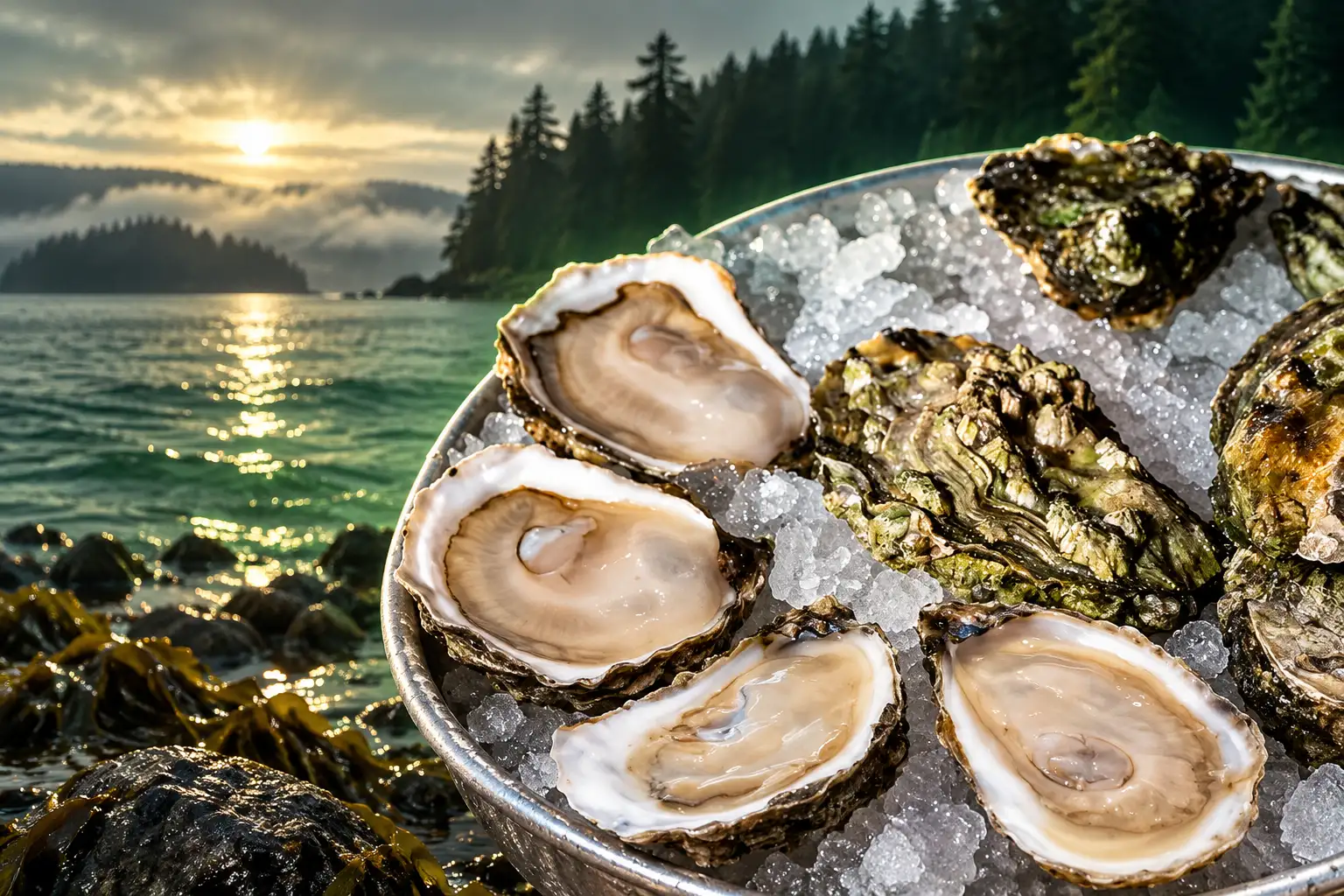
David Leck now pays $4.50 apiece for oysters at Elliott’s Oyster House in Seattle that cost $1 not long ago. He buys the shellfish for the Pier 56 restaurant, and he still loves the mellow finish of Baywater Sweets and the metallic tang of tiny Olympias.
The oysters he likes most are the ones he no longer sees. His parents used to drive him west to Hood Canal, where he pulled them off the beach and opened them with a screwdriver.
Hood Canal Lost a Whole Summer of Digging
“There were so many oysters out in the places where now they’re so scarce,” Leck said. “You couldn’t walk without oysters everywhere.” His family also dug clams, set crab pots and fished for salmon. He says you cannot really live that way now. Summers run warmer, more people chase fewer fish and shellfish, and harvest windows shrink around bacteria and toxic algae.
Those limits stopped being a footnote in 2026. From June 12 through Sept. 3, the Washington Department of Fish and Wildlife and the state health department shut recreational harvest of clams, mussels, oysters and other mollusks across Hood Canal and parts of Admiralty Inlet, an unprecedented summer-long biotoxin closure that lasted 84 days. Commercial beds on the canal were pulled as well. The algae was Alexandrium catenella, which loads saxitoxin into filter feeders and can kill a person who eats the shellfish.
On July 2, after lab work on samples taken near Hoodsport, the health department warned of lethal levels of paralytic shellfish poison and kept the canal closed from Foulweather Bluff and Port Ludlow Bay south, then pushed the line out to Port Townsend, Oak Bay and Marrowstone Island. Crab and shrimp stayed off that list. Clams, oysters, mussels and scallops did not.
THE 2026 HOOD CANAL SHUTDOWN
- June 12, 2026: State fish and health agencies close public harvest of clams, mussels, oysters and other mollusks on Hood Canal and southern Admiralty Inlet after biotoxin tests spike.
- July 2, 2026: The health department reports lethal paralytic shellfish poison near Hoodsport and widens the recreational closure.
- Sept. 3, 2026: The canal-wide recreational shutdown that began June 12 ends in some bays after 84 days.
- Sept. 4, 2026: Harvest returns at Dabob and Quilcene bays and at Belfair State Park; Point Whitney’s oyster-only season is stretched to offset the lost summer.
- Oct. 14, 2026: A Oct. 13 emergency rule reopens Duckabush, extends Belfair and Point Whitney oysters through Oct. 31, and leaves Port Gamble Bay, Mats Mats Bay, Port Ludlow Bay and the south canal closed.
Chris Eardley, WDFW’s Puget Sound shellfish policy coordinator, said the toxin “developed quickly and intensely, persisting for months in ways not previously observed in Hood Canal.” Growers and tribal harvesters sat through the same empty tide. Northwest Treaty Tribes called the shutdown bad news for tribal harvests and the local shellfish economy, a canal-wide halt, not a boutique restaurant problem.
A NOAA lab method is a large reason no one later had to explain a mass recall. State public health labs put a receptor binding assay for the toxin into use in autumn 2025, a test that does not depend on live mice and that can catch trace levels the older mouse assay missed. Jerry Borchert, marine biotoxin lead at the health department, credited that sensitivity with blocking illnesses and a major seafood recall in the first week of June, before the bloom went canal-wide.
During a severe toxic algae bloom event in Hood Canal, a NOAA-developed shellfish toxin test helped @WADeptHealth detect dangerous toxin levels early, close harvest areas quickly, and prevent illnesses and a major seafood recall.https://t.co/scLyZNLcIt pic.twitter.com/IiB0qlJXiX
— NOAA Coastal Ocean Science (@noaacoastalsci) July 31, 2026
The Extra Cost of Keeping Oysters on Menus
Lissa Monberg, co-owner of Hama Hama Oyster Company in Lilliwaup, works the same canal Leck used to walk. The family timber business dates to the late 19th century; the oyster beds date to the 1950s. The farm now calls itself a 6th-generation oyster and tree farm. The 2026 bloom was, she said, only the second canal-wide shutdown in the company’s oyster history. The last broad close, during the 2015 marine heat wave, was shorter. This one hit sales from June through August.
There’s nothing you can do about PSP. You can’t cook it out. You can’t process it out. It doesn’t matter if you freeze it. You could incinerate the product and then eat the ashes and I’m pretty sure the toxin would still be there.
Lissa Monberg, co-owner, Hama Hama Oyster Company
Cooking is the wrong tool for this toxin. It is the right tool for a different summer hazard, Vibrio bacteria, which the health department says die at 145 degrees Fahrenheit for 15 seconds. PSP is an algal poison. Sight, smell and a hot pan do not touch it. That is why a closed beach stays closed until the lab says otherwise, and why a restaurant oyster is no longer the same object as a screwdriver oyster.
Hama Hama still had something to sell because it had already spent money to stop being a one-beach farm. Monberg’s crew put in tanks that purge bacteria from live oysters and, for more than a decade, has run seed and grow-out in several places, so a closure in one inlet does not zero the truck. Extra sites mean extra rent, extra labor and extra testing. She has described that stack as capital-heavy, the sort of backup-to-the-backup any grower now needs as the water gets less predictable.
WHAT FARMS BOUGHT TO STAY ON THE TRUCK
- Extra beaches: Hama Hama kept selling from tidelands outside the closed canal, a hedge that raises operating cost with every new lease.
- Purge tanks: Depuration gear flushes bacteria from live oysters before they leave the farm, a Vibrio control that does nothing to PSP but is now part of the summer bill.
- New toxin tests: The state’s receptor binding assay, in use since autumn 2025, caught trace poison in early June and, Borchert said, averted a recall.
- Idle crews: Nate Wight of Jorstad Creek Oyster Company, farming 9 acres at Lilliwaup since 2014, put the summer at about a 20% revenue hit and used the downtime to seed geoduck instead of packing Pacifics for grocery stores, restaurants and a Las Vegas casino account.
Joth Davis, who grows Baywater Sweets in Thorndyke Bay, saw sales down by as much as 50% at one Hood Canal site and started looking for ground elsewhere in Puget Sound. Alice and Van Helker, who founded small Fjordlux Oysters on the canal a few years before the pandemic, have now eaten a heat wave that cooked oysters on the beach, a virus-year market crash and this algae shutdown. They still sell to restaurants and, cheaper, at a farmers market. The people who can pay for tested, trucked oysters still want them. The people who used to take them home in a bucket had no legal beach.
Olympias Got Scarce Long Before the $4.50 Plate
The native Olympia, Ostrea lurida, is the tiny copper-and-cream oyster Leck still chases on a tasting tray. It was the beach food of this coast for millennia, in sea gardens and later in commercial beds, before overharvest, habitat loss and a taste for bigger imported Pacifics pushed it to the edge of the menu. Pacific oysters, brought as seed from Japan in the early 20th century, now fill almost every West Coast raw bar, including Elliott’s.
Even those Pacifics have been a science project. When ocean acidification began killing oyster larvae in hatcheries in the late 2000s, growers and researchers answered with water monitoring, seed reared in less vulnerable water and buffering treatments. That work kept the industry alive. It did not put free oysters back on Hood Canal gravel.
Borchert has said the biotoxin season now starts earlier than it used to, and that Washington sees biotoxin closures in every month of the year. A marine heat wave off the West Coast has run 1.6 to 2.2 degrees Celsius above normal, according to NOAA figures circulating with the 2026 bloom. Warm, still, sunny water is the weather Alexandrium likes. Cysts of the algae already sit in canal sediment, viable for decades, waiting for the next quiet, bright stretch.
Joseph Pavel, natural resources director for the Skokomish Tribe, said the monitoring web of tribes, farms, SoundToxins volunteers and the health department did its job: no illnesses tied back to the harvest, and no unsafe lots reached the market. That is a public-health success. It is also a map of who still eats. The oysters that cleared the lab moved through farms and restaurants. The public tideflat did not.
Who Still Gets Them Cheap, and Who Does Not?
Elliott’s still runs a weekday deal. In the bar and lounge, $2 oysters Monday through Friday from 2:30 to 4:30 p.m., with $9 shareable plates, through May 31, 2027. That is not the $1 shooter of a few years back, and it is not the $4.50 Leck now pays when he is buying for the dining room. It is a two-hour window on a waterfront pier that opened in 1975 and now turns 24 to 26 West Coast varieties on a given night.
THREE PRICE LANES IN SEATTLE
- Weekday bar: $2 each at Elliott’s, bar and lounge only, 2:30 to 4:30 p.m.
- Dining tray: $4.50 each, the figure Leck cites for the restaurant oyster that used to be $1.
- Other raw bars: $3 to $4 each at Seattle oyster counters this fall, with no $1 list in sight.
Farm-direct is the other door. Hama Hama will ship three dozen Hama Hama oysters for $75, plus ice-pack freight, or a 10-dozen bag for $275 with free shipping in the continental United States. That is still a planned purchase, not a screwdriver on a public beach. Lauren McCool, an oyster educator and shucker at Pop Up Oyster Bar, has watched diners treat a dozen as a $60-class snack before dinner and said she does not like how out of reach the habit now feels, even in a city full of high tech paychecks.
Langdon Cook, a Seattle wild-foods writer and teacher, has watched recreational shrimp and Dungeness seasons shrink as managers try to hold the stocks. Scarcity, he argues, changes the feeling of the food. A bar used to sell a shucked oyster, a splash of vodka and cocktail sauce for a dollar. Servers now talk through the shell the way a sommelier talks through a slope, using “merroir,” the marine cousin of terroir. He does not call that reverence a tragedy. He does say some wild foods have simply left the plate, which he treats as the last form of respect.
Bartenders Now Sell Merroir With the Shell
Mark Kurlansky, who has spent a career on fish that used to be cheap, has asked whether this is the gentrification of seafood. Atlantic cod was so ordinary in his childhood that his mother called it “fish.” After decades of overfishing and now warm-water stress, it eats like a luxury. His follow-on question is the one Leck’s $4.50 plate poses in Seattle: if the people who harvest less must charge more to stay alive, what do lower-income households eat, and does the coast become a rich person’s protein?
The Pacific Northwest is the strange case in that argument, because the oysters are farmed, not hunted out, and because the same warming that closes beaches also pushed this coast into hatchery science. Growers like Monberg and Davis are not sitting on a vanished wild stock. They are sitting on a live crop that can be unsafe for months, and on a restaurant market that will pay for the crop that clears the test. Becky Selengut, a Seattle cook and food writer, has answered rising Dungeness and salmon prices by using less meat, more broth, more collars and skin. Her fisher friends tell her the other philosophy: you have to keep eating it if you want it to stay in the culture.
That split is the second bill inside the $4.50 oyster. One path is a tasting tray with 24 names and a lecture on Thorndyke Bay. The other is a public beach that is open, posted and actually full. The 2026 canal did not offer the second path. It offered the first, at a markup that now looks normal.
Washington Grows More Farmed Shellfish Than Any Other State
The Washington State Department of Agriculture still lists the state as the nation’s number one producer of shellfish aquaculture, with annual production estimated in excess of $200 million and about 2,700 direct and indirect jobs. Growers’ groups put Hood Canal at roughly 15% of that output. A 2025 paralytic-shellfish closure in Willapa Bay, on the outer coast, ran more than $1 million in losses. A canal that feeds tribes, weekend diggers and raw bars cannot take an 84-day zero without moving the price on the half shell.
WHAT AN OYSTER COSTS THIS FALL
| Where you buy | Price | What sits in the box |
|---|---|---|
| Elliott’s dining tray | $4.50 each | Restaurant oyster Leck now buys, up from $1 |
| Elliott’s weekday bar | $2 each | Happy hour, 2:30-4:30 p.m., bar and lounge |
| Other Seattle raw bars | $3 to $4 each | Standard list price this fall |
| Hama Hama, 3 dozen | $75 | 36 farm oysters, shipping extra |
| Hama Hama, 10 dozen | $275 | 120 oysters, free U.S. shipping |
The farm packages undercut the dining-room tray and still cannot restore Leck’s childhood math, because the missing dollar is not only markup. It is testing, purge tanks, idle weeks, extra leases and a city that will pay $4.50 without blinking. Dollar oyster nights have been fading for a couple of years. The 2026 canal gave that fade a toxin report and a date range.
Sold-Out Tickets and Half-Open Beaches
Elliott’s 33rd Oyster New Year is set for Nov. 7, 2026, with general admission at $175 and VIP at $250. The house says tickets are sold out. The plan on paper is 40-plus shuckers opening 18,000 raw oysters, 25-plus featured varieties, an oyster luge and a cut of proceeds for the Puget Sound Restoration Fund. Peak season, on a pier, with a band. That is the restaurant’s answer to a summer of empty public gravel.
THE OCT. 13 HARVEST RULE
- Open through Oct. 31: Belfair State Park for clams, mussels and oysters; Point Whitney Tidelands and Lagoon for oysters only; Triton Cove Tidelands for clams and mussels.
- Open until further notice: Duckabush Tidelands for clams, mussels and oysters, after a water-quality upgrade.
- Still closed: Port Gamble Bay south of Teekalet Point to Point Julia; Mats Mats Bay through Port Ludlow Bay; Hood Canal south of a Triton Head-to-Tekiu Point line and west of Sisters Point.
Harvesters still have to check the state Shellfish Safety Map the morning they go, because a bloom can rewrite a beach overnight. Eardley called the lost summer alarming and said the point of the close was to keep people from getting seriously sick. The people who wanted a free protein from Hood Canal waited 84 days and then got a patchwork. The people who wanted a dozen on Pier 56 never lost the option. They just paid $4.50, or $2 if they came at 2:30.
Leck can still put a Baywater Sweet and an Olympia on the same tray. He cannot walk the canal of his childhood without watching his step for a closure sign. The screwdriver is in a drawer. The test results are on a state map. The oyster is a restaurant food.

Chinese Design Booms While Luxury Spending in China Falls

Abbott Spins Off Nutrition After Formula Legal Bills

French Law and Two Unions Hold Arkane Lyon’s Clock

FSSAI Brings a 1992 Formula Ban Onto Instagram Reels

Capcom ID Leak Hands Attackers a Ready Phishing Kit

The Last Manual V-12 Lamborghini Cannot Come to America

Permafrost Thaw Runs Fastest in Mountains, Not Arctic Soils

Rune Bets on Hillerød for His Achilles Comeback

The Roman Space Telescope Flies After Four Budget Fights

Software Stocks Rally as Underweight Funds Face Dreamforce
-
 AUTO2 months ago
The Last Manual V-12 Lamborghini Cannot Come to America
-
 NEWS2 months ago
Permafrost Thaw Runs Fastest in Mountains, Not Arctic Soils
-
 NEWS2 months ago
Rune Bets on Hillerød for His Achilles Comeback
-
 NEWS2 months ago
The Roman Space Telescope Flies After Four Budget Fights
-

 NEWS2 months ago
Murphy Defends a British Open Title Nobody Keeps
-
 BUSINESS2 months ago
JBS’s Pilgrim’s Pride Bid Still Needs the 18 Percent
-
 BUSINESS2 months ago
Software Stocks Rally as Underweight Funds Face Dreamforce
-

 BUSINESS2 months ago
Influencer Investors Trade Cash Fees for Illiquid Equity