
NEWS
The EU Free Cabin Bag Stops at a Personal Item
EU cabin bag rules from 23 October 2027 freeze a 40 x 30 x 15 cm personal item and a default trolley fare, not a mandated 7 kg suitcase.

The EU’s new air passenger law, published on 2 October, does not freeze a free 7 kg cabin case for every traveller. Regulation (EU) 2026/2202 as published amends the 2004 passenger-rights rulebook and applies from 23 October 2027.
The only bag that must travel free is a personal item small enough for the space under the seat. Airlines still set the size of the overhead trolley, and they can still sell a cheaper fare to anyone who leaves that trolley at home.
The Journal Freezes a Small Personal Item, Not a Suitcase
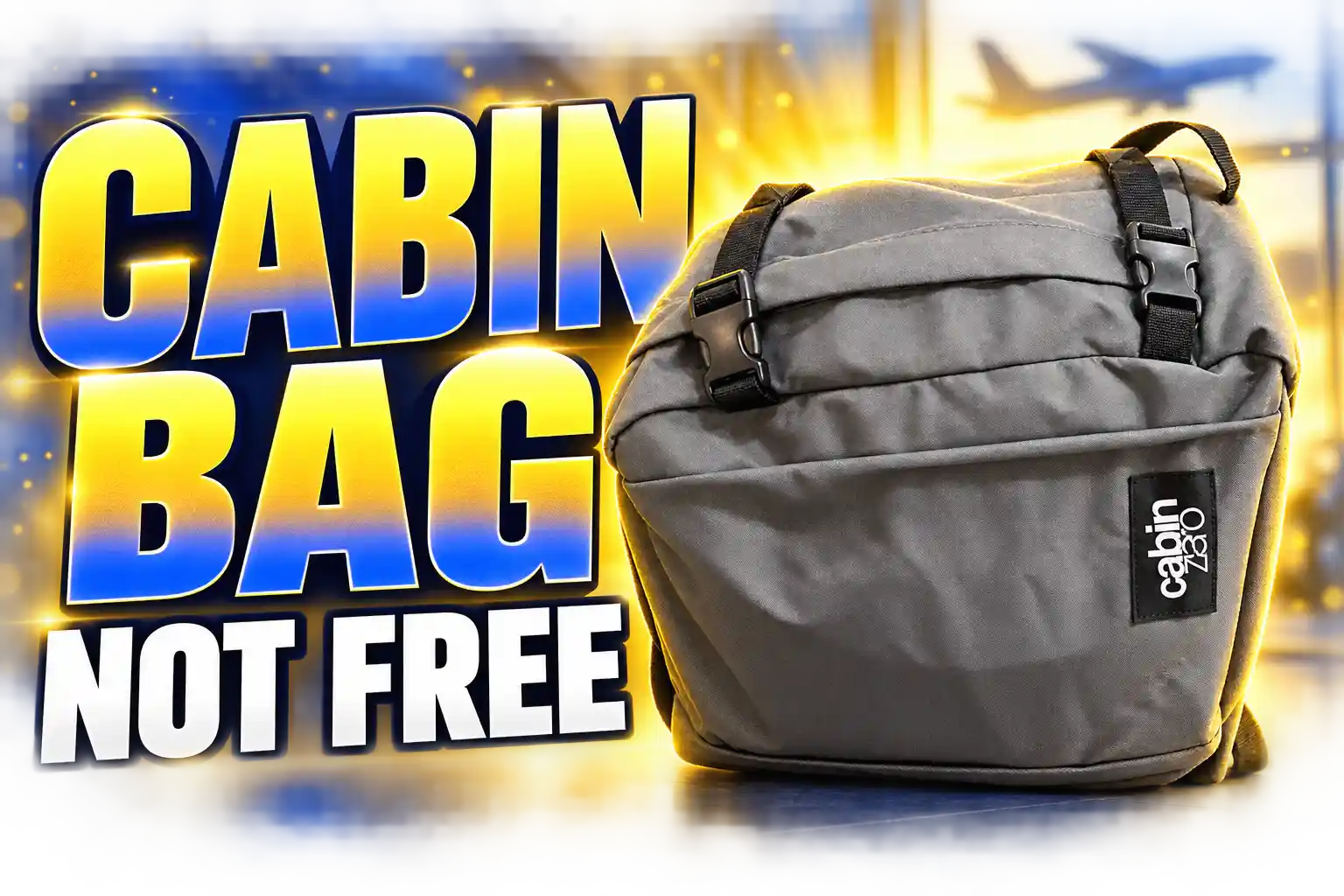
Article 11a draws a hard line that most of the early write-ups blurred. Operating carriers “shall permit passengers to carry a personal item into the cabin and at no extra cost.” A personal item is defined as unchecked baggage that meets safety rules and is either 40 x 30 x 15 cm or able to fit under the seat in front.
The Council’s own explainer puts that in plain terms: passengers are always entitled to a personal item of 40cm x 30cm x 15cm, or one that slides under the seat. That is one bag, described two ways, not two free bags stacked on top of each other.
Hand baggage is a different object. The regulation defines it only as unchecked baggage that is not a personal item. Carriers “shall, subject to the capacity of the aircraft cabin, permit passengers to carry a piece of hand baggage into the cabin.” The default price on a booking screen must include that piece. The same paragraph says carriers and booking sites may still offer a cheaper fare to passengers who “voluntarily choose to travel without hand baggage.”
WHAT ARTICLE 11A ACTUALLY DOES
- The free item: A personal item of 40 x 30 x 15 cm, or one that fits under the seat, travels at no extra cost.
- The trolley fare: Any advertised price must, by default, include a piece of hand baggage before the booking starts.
- The opt-out: A cheaper fare with no hand baggage remains legal if the passenger chooses it.
- The cabin caveat: If safety, capacity, or an aircraft change means the bag cannot ride in the cabin, it goes in the hold at no further cost.
Recital 43 even names the included piece “a trolley bag,” then immediately protects fares that omit it. Recital 45 tells airlines to set a “reasonable policy” on dimensions, “subject to the capacity of the aircraft cabin,” and parks any uniform minimum for a later look at Regulation 1008/2008, the EU’s air-services pricing rule. The law forces the trolley onto the first price tag. It does not write the centimetres of that trolley into statute.
Where the 7 kg Figure Came From
A 7 kg cap and a 100 cm combined-size cap did exist, just not in the text that now sits in the Official Journal. They appeared in the European Parliament’s earlier draft, which said hand baggage inside those limits should carry no surcharge on the ticket. Conciliation cut the numbers.
By 7 July 2026, when MEPs approved the joint text 646 to 12 with 3 abstentions, Parliament’s own press note had already narrowed the free right. It described the right to carry one personal item, “such as a small bag or backpack,” plus a duty on airlines, intermediaries and search portals to display the fare “inclusive of carry-on luggage” at the start of booking. Cheaper tickets for people who travel without hand luggage stayed in the text.
That is why the 7 kg suitcase is still travelling as if it were the law. The figure belonged to a draft that did not survive the joint text. A 100 cm sum is also tighter than the trolleys low-cost carriers sell today. Ryanair’s paid cabin bag of 55 x 40 x 20 cm already adds up to 115 cm. easyJet’s large cabin bag of 56 x 45 x 25 cm adds up to 126 cm. Wizz Air’s 55 x 40 x 23 cm bag adds up to 118 cm. Even the dropped cap would have been smaller than the case most people mean when they say “cabin bag.”
The 7 kg reading also keeps spreading because it is simple. A two-price screen is harder to screenshot. Apostolos Tzitzikostas, the EU commissioner for sustainable transport and tourism, put the actual bargain in one line on 16 June: tickets will have one price with hand luggage and one without.
It’s a great day for travellers and airlines!✈️🧳🇪🇺
After 13 years of negotiations, we have reached an agreement on strengthening EU air passenger rights.
This agreement shows that Europe can deliver practical solutions that benefit both citizens and businesses.
✅ Clearer… pic.twitter.com/BRi30lIV3W
— Apostolos Tzitzikostas (@tzitzikostas) June 16, 2026
Ryanair Still Charges for the Overhead Trolley
Low-cost carriers already give every passenger a small under-seat bag. The fight has always been about the second object, the wheeled case that goes in the locker. Ryanair’s help pages still say all fares include one small personal bag of 40 x 30 x 20 cm that must fit under the seat, with a 10 kg bag of 55 x 40 x 20 cm sold as “Priority & 2 Cabin Bags.”
That free Ryanair pouch is already deeper than the EU personal item. The legal floor is 15 cm on the third side; Ryanair allows 20 cm. easyJet’s free under-seat bag is larger still, at 45 x 36 x 20 cm and up to 15 kg. Wizz Air matches Ryanair’s 40 x 30 x 20 cm free bag and adds a 10 kg cap. British Airways already includes a 40 x 30 x 15 cm item plus a 56 x 45 x 25 cm cabin bag, so the new default-fare rule lands on a product it already sells.
CABIN BAGS AGAINST THE NEW LEGAL FLOOR
| Airline (2026 basic fare) | Free under-seat bag | Paid or bundled overhead bag | Overhead bag, sides added |
|---|---|---|---|
| EU personal item from 23 October 2027 | 40 x 30 x 15 cm, or under the seat | Size not set in the regulation | Not set |
| Ryanair | 40 x 30 x 20 cm | 55 x 40 x 20 cm, 10 kg | 115 cm |
| Wizz Air | 40 x 30 x 20 cm, 10 kg | 55 x 40 x 23 cm, 10 kg | 118 cm |
| easyJet | 45 x 36 x 20 cm, 15 kg | 56 x 45 x 25 cm, 15 kg | 126 cm |
| British Airways | 40 x 30 x 15 cm | 56 x 45 x 25 cm (included) | 126 cm |
Stiftung Warentest, the German consumer testing body, listed Ryanair’s added cabin bag in September 2026 at 12.49 to 36 euro if bought online and 19.99 to 45.50 euro at the airport. Wizz Air’s add-on sat at 10 to 60 euro online and 55 to 65 euro at the airport. Those products do not vanish on 23 October 2027. They have to sit behind a first screen that already includes a trolley, and they can reappear as the gap between that default fare and a cheaper no-bag fare.
Base fares on that default screen will almost certainly rise on the carriers that now unbundle the locker bag, because the first number can no longer be a seat-only price. The cheaper no-bag ticket is how they keep a headline fare for passengers who pack only a pouch. Gate sizers will still do the enforcement, because the law leaves the centimetres of the trolley to each airline’s “reasonable policy.”
Which Flights Fall Inside the New Rule?
Article 3 of the amended 261 rulebook is territorial, not about passports. It covers passengers leaving an airport in a Member State, on any airline. It also covers passengers flying from a third country into a Member State when the operating carrier is a Union air carrier, unless they already received equivalent help in that third country.
A flight that leaves Paris, Madrid or Dublin is in. A flight that leaves Manchester or Gatwick is not, because the United Kingdom is not a Member State. The return leg from an EU airport is a departure from a Member State, so the bag and display rules bite on the way home, on any carrier operating that sector.
easyJet has said the new rules will apply to UK passengers only on return flights from EU countries. That matches the map in Article 3. British Airways and other UK-based operators sit in the same gap on the outbound sector. The regulation carries EEA relevance, so the same text is written to travel into Norway, Iceland and Liechtenstein once those states apply it, but it does not pull UK airports back into the Member State column.
The Commission is due, within three years of the new rules, to look at whether the scope should stretch further onto third-country operators. Until that review, the outbound UK sector remains the hole in the shield.
Thirteen Years, Then a Fare That Shows the Bag
The cabin-bag clause is a late graft onto a fight that began as a rewrite of delay pay. The Commission tabled the revision in 2013. It sat in the Council until a first-reading position on 29 September 2025. The Conciliation Committee locked a joint text on 15 June 2026. Cyprus’s transport minister, Alexis Vafeades, marked the deal in public that evening.
I’m proud that, after 13 years of negotiations, we reached a landmark agreement to strengthen EU air passenger rights.
Alexis Vafeades, Minister of Transport, Communications and Works of Cyprus, Council of the EU, 15 June 2026
The bag language is the part of that deal a traveller will see at the search box. The rest of the same instrument keeps compensation at 250 euro, 400 euro and 600 euro once a flight is more than three hours late, and when a cancellation lands less than 14 days before departure. Assistance is spelled out as refreshments every two hours, a meal after three hours and every five hours after that up to three meals a day, plus internet access and two phone calls. A passenger who is not offered a reroute within three hours may buy one and claim back up to 400% of the original ticket.
HOW THE 2004 RULES WERE REWRITTEN
- 11 February 2004: Regulation (EC) No 261/2004 sets the original delay, cancellation and denied-boarding rights.
- 2013: The Commission proposes a revision; the file then stalls in the Council.
- 29 September 2025: The Council adopts its first-reading position.
- 15 June 2026: Parliament and Council reach a joint text after 13 years of negotiations.
- 7 July 2026: Parliament approves the joint text 646 to 12, with 3 abstentions.
- 13 July 2026: The Council gives final clearance.
- 16 September 2026: The act is signed in Strasbourg.
- 2 October 2026: The regulation is published in the Official Journal; it enters into force on 22 October 2026 and applies from 23 October 2027.
Thirteen years produced a display rule, not a Union-wide suitcase. The first price a passenger sees must include a trolley. The second price can strip it out. That is the commercial shape Commissioner Tzitzikostas described, and it is the shape Article 11a actually enacts.
If the Cabin Is Full, the Bag Goes Below
The capacity caveat is the sentence that will be read at the gate. Article 11a(2) lists safety, capacity, or a change of aircraft type since booking as reasons to take a personal item or a piece of hand baggage out of the cabin. The carrier may do that at check-in or at the gate. It may not add a further charge for moving that bag into the hold.
Operating air carriers shall, subject to the capacity of the aircraft cabin, permit passengers to carry a piece of hand baggage into the cabin.
Article 11a, Regulation (EU) 2026/2202
That is a different outcome from a gate fee for an “oversized” trolley on a basic fare. On the default, bag-inclusive ticket, a full locker becomes a free hold transfer, not a last-minute add-on. On the cheaper no-bag ticket, the passenger who turns up with a trolley is still buying a product the fare did not include. The sizer at the gate remains the practical judge of which product was bought, because the regulation never froze the trolley at 7 kg or 100 cm.
Carriers and booking sites must also show, at the time of booking, the maximum cabin and hold allowance for that fare, any item-count limits, the rules for fragile goods, extra charges, and the reasons a bag might be refused in the cabin. The information duty is wide. The size of the free overhead case is not.
From 23 October 2027 the first fare on an EU booking screen has to include a trolley, the pouch under the seat is a legal right, and a full locker on that inclusive ticket sends the bag below without a new fee. The 7 kg cabin case that filled the headlines never made the Journal.
Frequently Asked Questions
When do the new EU cabin bag rules start to apply?
They apply from 23 October 2027. The regulation entered into force on 22 October 2026, the twentieth day after it appeared in the Official Journal, but that earlier date only starts the legal clock. The bag, display and hold-transfer duties bind carriers from the later date, and the act is marked as text with EEA relevance, so Norway, Iceland and Liechtenstein are written in once they apply it.
Do booking sites have to show the trolley-inclusive fare too?
Yes. Recital 43 extends the default-display duty to air carriers, intermediaries and meta search engines, not only to an airline’s own site. The first fare those sites show before a booking starts must include a piece of hand baggage, even though a cheaper fare without that piece may sit beside it.
Will the EU set one cabin-bag size for every airline?
Not in this regulation. Recital 45 says the feasibility of uniform minimum hand-baggage rules should be assessed when Regulation 1008/2008, the EU air-services pricing law, is next reviewed. Until that review, each carrier keeps its own “reasonable policy” on trolley dimensions, subject to cabin capacity, safety and security.
Can I take a musical instrument as cabin baggage?
The same amending act adds a dedicated rule for instruments. They may go in the cabin if they can be stowed safely in a locker or under a seat, and they count toward the passenger’s unchecked allowance. If an instrument needs its own seat, the carrier may charge a second fare for that seat, without the extra ticket taxes that normally attach to a passenger fare.
Are spelling mistakes on a ticket still a reason to deny boarding?
The joint text requires a free correction of a name when the change is requested at least 48 hours before the journey and does not alter the time, date, itinerary or passenger. A mismatch between the booking name and the corrected name is not, on its own, grounds to refuse boarding.
What is the Union Air Passenger Rights Label?
It is a voluntary mark, created in the same regulation, so that a booking screen can show whether the 261 protections apply in full to a given itinerary, including a round trip that leaves and returns to the Union. Carriers and intermediaries are not forced to use it unless a commercial contract with the operating carrier says they must.

Sojitz Buys New England Seafood as Sealaska Exits Europe

The EU Free Cabin Bag Stops at a Personal Item

Kelly Restored 78 White House Passes, Not the Plane

Delta Adds Venice and Athens Routes as Cities Tighten Access

Build a Rocket Boy Enters Administration After the MindsEye Collapse

Rune Bets on Hillerød for His Achilles Comeback

Permafrost Thaw Runs Fastest in Mountains, Not Arctic Soils

The Last Manual V-12 Lamborghini Cannot Come to America

The Roman Space Telescope Flies After Four Budget Fights

Software Stocks Rally as Underweight Funds Face Dreamforce
-
 NEWS2 months ago
Rune Bets on Hillerød for His Achilles Comeback
-
 NEWS1 month ago
Permafrost Thaw Runs Fastest in Mountains, Not Arctic Soils
-
 AUTO1 month ago
The Last Manual V-12 Lamborghini Cannot Come to America
-
 NEWS1 month ago
The Roman Space Telescope Flies After Four Budget Fights
-
 BUSINESS1 month ago
Software Stocks Rally as Underweight Funds Face Dreamforce
-

 NEWS1 month ago
Dallas Judge Blocks the SEC Ban, Coaches Still Face Fines
-

 BUSINESS1 month ago
JBS’s Pilgrim’s Pride Bid Still Needs the 18 Percent
-

 BUSINESS1 month ago
Influencer Investors Trade Cash Fees for Illiquid Equity