
BUSINESS
FSSAI Brings a 1992 Formula Ban Onto Instagram Reels
India’s food regulator asked Nestlé, Abbott, two other formula makers and an Instagram creator to explain a Top 5 infant-formula reel under the 1992 ad ban.

India’s food regulator on 21 October named Instagram creator Ira Fathima and four infant-formula makers over a single “Top 5” reel. The Food Safety and Standards Authority of India asked them to explain why action should not follow under food-safety law.
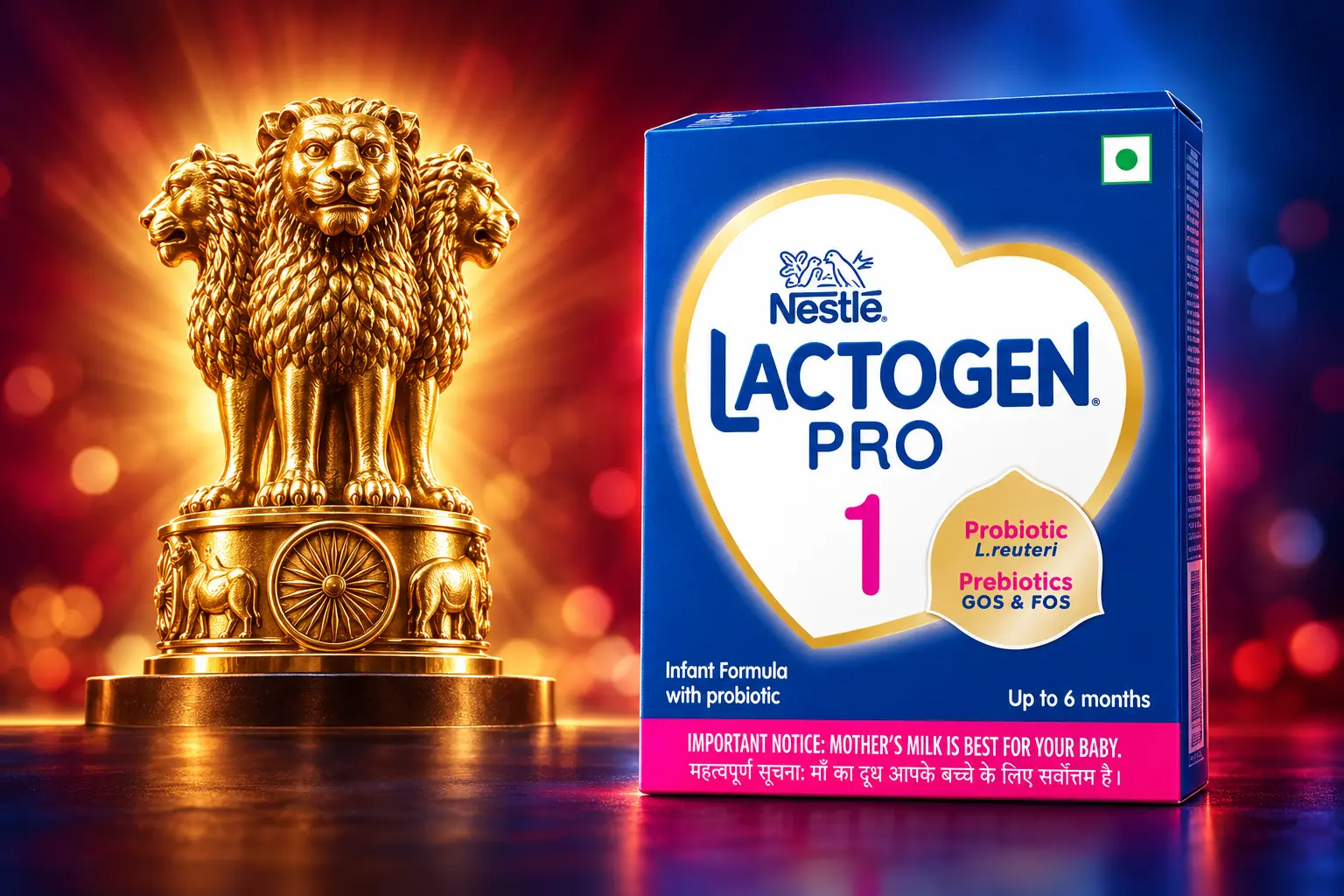
The same day, FSSAI also went back at Nestlé India over whey and immune claims on Lactogen Pro 1 and NAN Excella Pro Stage 1, and questioned growth claims on Zydus Wellness’s Complan. Separate notices treat Fathima’s ranking, which named Nan-Pro 1, Aptamil Premium 1, Similac Advance 1, Enfamil A+ Stage 1 and Dexolac 1, as illegal promotion under the 1992 infant-formula advertising ban.
FSSAI Names an Influencer and Four Formula Makers
On Wednesday, 21 October 2026, @fssaiindia posted that it had issued notices to food businesses over “misleading claims and non-compliant promotions” involving Complan, Lactogen Pro 1 Powder, Nan Excella Pro Stage 1 “and infant milk substitutes.” The post carried four notice cards.
FSSAI has issued notices to Food Business Operators (FBOs) regarding misleading claims and non-compliant promotions involving products like Complan, Lactogen Pro 1 Powder, Nan Excella Pro Stage 1 and infant milk substitutes. #FSSAINotice #FSSAIAction pic.twitter.com/gALgapW5xn
— FSSAI (@fssaiindia) October 21, 2026
The Instagram file is the part of that pile the pack-claim stories barely held. FSSAI said a reel from Fathima, who posts as @ira_fathima, featured a “Top 5” list of infant formula products and assigned them balanced nutrition, stronger immunity, brain development and easy digestion. The regulator alleged that this promotion breached the Infant Milk Substitutes Act, 1992, as amended in 2003, and the advertising, marketing and promotion clauses of the Food Safety and Standards (Foods for Infant Nutrition) Regulations, 2020. It told five parties to explain why action should not start under the Food Safety and Standards Act, 2006.
THE INSTAGRAM REEL
| Party named | Product in the reel | Role on the notice |
|---|---|---|
| Ira Fathima (@ira_fathima) | Posted the “Top 5” ranking | Creator of the reel |
| Nestlé India | Nan-Pro 1 | Maker named in the ranking |
| Abbott Healthcare | Similac Advance 1 | Maker named in the ranking |
| Nutricia International | Aptamil Premium 1 and Dexolac 1 | Maker named in the ranking |
| Mead Johnson Nutrition (India) | Enfamil A+ Stage 1 | Maker named in the ranking |
Nutricia International is Danone’s infant-nutrition unit in India. Mead Johnson Nutrition (India) sits under Reckitt. Abbott Healthcare is the local unit of Abbott Laboratories. None of those three has issued a public reply that has surfaced besides Abbott’s denial, set out below. Fathima has not issued a public reply that has surfaced either.
Why a Top 5 List Counts as Promotion
India did not write a gentle code of practice for baby-milk ads. Parliament passed the 1992 infant milk substitutes law after the 1981 International Code of Marketing of Breast-milk Substitutes, then tightened it in 2003. It came into force on 1 August 1993. The ban runs to two years of age and covers infant milk substitutes, feeding bottles and infant foods.
Section 3 is the clause FSSAI is now reading onto a reel. It does not say “no company shall buy an ad.” It says no person shall advertise, take part in the publication of any advertisement, give the impression that these products equal or beat mother’s milk, or take part in their promotion. The 2003 amendment defined promotion as employing, directly or indirectly, any method of encouraging a person to purchase or use the product. It also defined advertisement so that an advertisement includes electronic transmission and audio or visual transmission, which is how a 1992 statute reaches 2026 Instagram.
WHAT SECTION 3 BANS
- Any advertisement: No person shall advertise, or take part in publishing an advertisement, for the sale, supply or distribution of infant milk substitutes, feeding bottles or infant foods.
- Equivalence claims: No person shall give an impression, in any manner, that feeding these products is equal to or better than mother’s milk.
- Promotion itself: No person shall take part in the promotion of infant milk substitutes, feeding bottles or infant foods.
- Indirect methods: Promotion includes any method, direct or indirect, of encouraging someone to buy or use the product.
A “Top 5” list that assigns immunity, brain development and easy digestion to named Stage 1 tins is, on that wording, promotion. FSSAI did not have to prove a brand paid for the post in order to put the creator and the named makers on the same show-cause list. That is the shift the pack-claim notices do not capture. Compliance notes already treat paid influencer content or indirect promotions as inside the advertising ban, alongside discounts and in-store displays. The 21 October file asks whether an unpaid ranking is inside it too.
The 2020 foods for infant nutrition rules pull that older Act into FSSAI’s own book. Food for infant nutrition must meet the IMS Act, including sections 3, 4, 5, 7, 8, 9 and 10 on advertising, marketing and promotion, and claims must also meet the Food Safety and Standards (Advertising and Claims) Regulations, 2018. Labels may not show pictures of infants or women, or phrases designed to raise saleability. Businesses had to comply by 1 July 2021.
Nestlé’s Pack Claims Were Already Under Legal Action
The Lactogen and NAN notices on 21 October are a second pass, not a first look. A Nestlé India spokesperson said FSSAI’s recent post “reiterates the points raised in its earlier post of 18 September regarding product labels” and that the company had “already submitted our detailed response to FSSAI on these matters.”
On Lactogen Pro 1 Powder, FSSAI flagged the line that the product “contains whey protein, which is a part of milk protein that is easy to digest,” seen on packaging or advertising material, and asked for scientific proof. On NAN Excella Pro Stage 1, it flagged “5 HMOs helps support normal immune system.” HMOs are sugars modelled on those in human milk. The regulator said the wording could imply the product is suitable for supporting the immune system in relation to a particular physiological condition, and that claims about preventing, easing, treating or curing a disease, disorder or particular physiological condition are barred unless the rules specifically allow them. It also asked for proof of the whey line on that tin and told Nestlé India to explain why action should not start under the 2006 Act.
Those are label and claim questions. They sit on a different legal track from the reel, even though Nestlé India is named on both. The September action, on FSSAI’s own telling at the time, already covered promotional claims on the same two infant-nutrition products and material found on e-commerce listings.
THE NOTICES SINCE SEPTEMBER
- September 18, 2026: FSSAI says it has started legal action against Nestlé India over non-compliances on NAN Excella Pro Stage 1 and Lactogen Pro 1, including promotional claims.
- October 17, 2026: FSSAI issues notices to Nestlé India over Resource Renal vanilla powder, sold for people with chronic kidney disease, and to Hindustan Unilever over Horlicks Mother’s Plus and Horlicks Women’s Plus claims.
- October 21, 2026: FSSAI returns to the two Nestlé infant tins, notices Zydus Wellness over Complan, and notices Fathima plus four formula makers over the Instagram ranking.
From 18 September to 21 October is 33 days. Nestlé’s reply is that the October label posts do not raise a new pack file. They do not, on the company’s telling, answer the reel.
Horlicks, Complan and the Rest of the Sweep
The louder public argument has been about Complan, which is not infant formula and is not sold under the IMS Act. Zydus Wellness Products was told to justify “2X Faster Growth,” “Supports Concentration and Memory” and “Pro Immunity+ 34 Vital Nutrients,” shown with images of two children on the label, and the slogan “Growth Comes in 4 Flavors.” FSSAI also asked for science behind “GROW TALLER, FASTER. CLINICALLY PROVEN 2X GROWTH.” It placed those lines under the 2018 advertising and claims rules, not under the 1992 formula ban.
Four days before that, on 17 October, the same regulator had questioned Hindustan Unilever over “Healthy Birth Weight” on Horlicks Mother’s Plus Kesar and over bone-strength and “clinically proven” wording on Horlicks Women’s Plus Chocolate, and had told Nestlé India that Resource Renal, a powder for conservatively treated chronic kidney disease, fell under food for special medical purpose rules and lacked the prior approval those rules require. That Saturday post also said licences had been suspended for two other firms on separate food-safety grounds.
THE OCTOBER CLAIMS FILE
| Product | Company | Claim FSSAI flagged | Rule cited |
|---|---|---|---|
| Lactogen Pro 1 Powder | Nestlé India | Whey protein “easy to digest” | Proof demanded; 2006 Act show-cause |
| NAN Excella Pro Stage 1 | Nestlé India | “5 HMOs helps support normal immune system” | Disease and physiological-condition claim bar |
| Instagram “Top 5” reel | Fathima plus four makers | Immunity, brain development, easy digestion | IMS Act 1992/2003 and 2020 infant-nutrition rules |
| Complan | Zydus Wellness Products | “2X Faster Growth,” memory, “34 Vital Nutrients,” “4 Flavors” | Advertising and Claims Regulations, 2018 |
| Horlicks Mother’s Plus Kesar | Hindustan Unilever | “Healthy Birth Weight” | Advertising and Claims Regulations, 2018 |
| Resource Renal vanilla powder | Nestlé India | Sold for chronic kidney disease without prior approval | Food for special medical purpose rules |
Parenting talk has clustered around whether a growing-up drink can promise twice-as-fast growth. The legally sharper file is the ranking of Stage 1 formula, because that product class already had a near-total ad ban before anyone invented Reels. Complan can argue about evidence. A formula “Top 5” has to argue about whether the post is an advertisement at all.
Abbott Says the Reel Was Not Its Advertisement
Abbott Healthcare is on the Instagram notice because Similac Advance 1 appeared in the list, not because FSSAI quoted a Similac pack line. The company says it had no hand in the post and learned of it from the notice.
The content was independently created and published by a third party without Abbott’s knowledge, involvement or authorisation.
Abbott spokesperson, statement after the FSSAI notice
Abbott said it had told FSSAI as much and that it does not endorse the representations in the video. If the regulator accepts that defence, the remaining target on that file is the creator, and brands will argue they cannot police every parenting account that ranks their tins. If the regulator does not, every unsolicited “best formula” list becomes a notice risk for the makers named in it, paid or not.
Abbott has been in IMS-Act correspondence before. In 2025 the Breastfeeding Promotion Network of India told the Union health secretary that Abbott Nutrition was underwriting doctors’ travel and five-star rooms for a two-day paediatric meeting in Dehradun, which the network said breached Section 9’s bar on sponsoring health-worker events. The health ministry forwarded that complaint to state health secretaries. That file was about doctors and hospitality. This one is about a reel.
What a Notice Can Cost Under the 2006 Act
None of the 21 October notices is a finding of guilt. They are show-cause letters. The companies have a set period to reply, and FSSAI has said action may follow if the explanations fail. Nestlé India says its pack reply is already in. Abbott says it has told the regulator it did not commission the reel.
The 1992 Act still carries a first-offence penalty of imprisonment for up to three years, a fine of up to ₹5,000, or both, with directors and managers open to personal prosecution. That fine is the statute’s original figure. The notices, though, also invoke the 2006 Act, and that is where the money sits. Section 53 says any person who publishes, or is a party to the publication of, an advertisement that falsely describes food or is likely to mislead as to its nature, substance or quality is liable to a penalty which may extend to 10 lakh rupees. Section 52 puts misbranded food at up to ₹3 lakh. Section 51 puts sub-standard food at up to ₹5 lakh.
PENALTIES ON THE TABLE
- IMS Act, first offence: Up to three years in prison and/or a fine up to ₹5,000, with personal liability for directors and managers.
- FSS Act Section 53: Up to ₹10 lakh for publishing, or being party to, a misleading food advertisement.
- FSS Act Section 52: Up to ₹3 lakh for misbranded food, with power to order a correction or destruction of stock.
- FSS Act Section 51: Up to ₹5 lakh for sub-standard food.
Section 53 is the clause that matches an Instagram ranking, because it reaches “any person who publishes, or is a party to the publication.” That is the same idea as IMS Section 3, written 14 years later with a fine 200 times larger. FSSAI has spent September and October putting that pairing on the public record, tin by tin and now reel by reel. Abbott has told the regulator it was not a party to this publication. The notices still treat the ranking as promotion, and the file remains open.

Chinese Design Booms While Luxury Spending in China Falls

Abbott Spins Off Nutrition After Formula Legal Bills

French Law and Two Unions Hold Arkane Lyon’s Clock

FSSAI Brings a 1992 Formula Ban Onto Instagram Reels

Capcom ID Leak Hands Attackers a Ready Phishing Kit

The Last Manual V-12 Lamborghini Cannot Come to America

Permafrost Thaw Runs Fastest in Mountains, Not Arctic Soils

Rune Bets on Hillerød for His Achilles Comeback

The Roman Space Telescope Flies After Four Budget Fights

Software Stocks Rally as Underweight Funds Face Dreamforce
-
 AUTO2 months ago
The Last Manual V-12 Lamborghini Cannot Come to America
-
 NEWS2 months ago
Permafrost Thaw Runs Fastest in Mountains, Not Arctic Soils
-
 NEWS2 months ago
Rune Bets on Hillerød for His Achilles Comeback
-
 NEWS2 months ago
The Roman Space Telescope Flies After Four Budget Fights
-

 NEWS2 months ago
Murphy Defends a British Open Title Nobody Keeps
-
 BUSINESS2 months ago
JBS’s Pilgrim’s Pride Bid Still Needs the 18 Percent
-
 BUSINESS2 months ago
Software Stocks Rally as Underweight Funds Face Dreamforce
-

 BUSINESS2 months ago
Influencer Investors Trade Cash Fees for Illiquid Equity