
BUSINESS
Rubicon Research Q1 Tests Its Specialty Pharma Bet
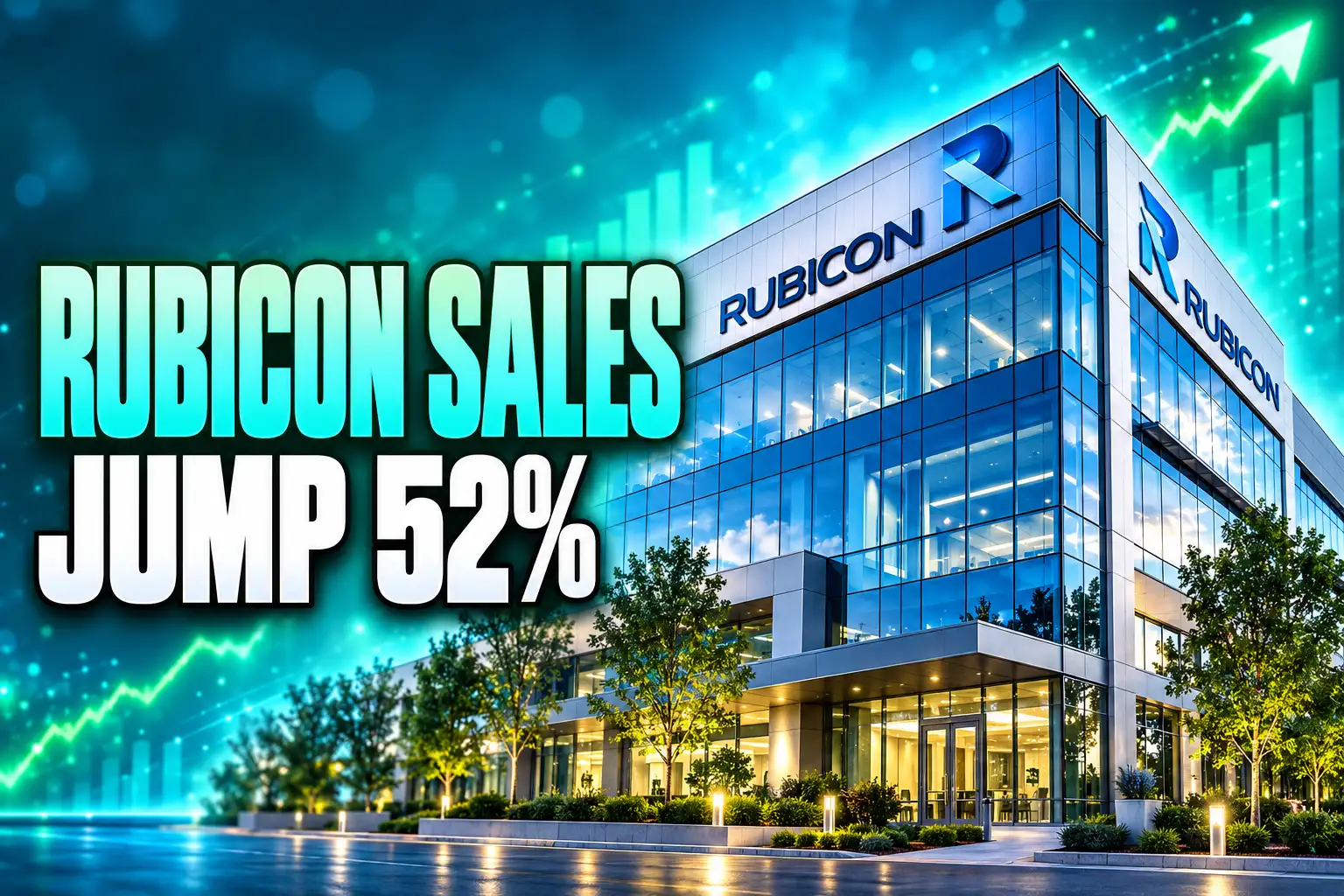
Rubicon Research grew Q1 FY27 sales 51.6% and raised margin guidance, as specialty mix and a cheap New Jersey plant test an expensive post-IPO bet.

INR 5,343 million of Q1 FY27 sales, up 51.6% from a year earlier, and a full-year operating EBITDA margin target of 23% are the headline from Rubicon Research. The Thane formulations maker also said specialty products supplied 36% of gross profit in the quarter, up from 13% in fiscal 2023.
Shares closed at ₹1,619.10 on results day, August 14, almost unchanged. By August 21 they were at ₹1,724.70, with a market value of about ₹28,549 crore, after a public listing last October at ₹620.10.
Rubicon’s First Quarter Tests the Specialty Wager
The company listed in mid-October 2025 and closed the Arinna Lifesciences deal in April 2026, so this is the first quarter that carries both the public-market multiple and the India brand buy. Chief executive Parag Sancheti told analysts it was also the first reporting period since Arinna closed, and that the deal added roughly INR 12 crore of sales with no material hit to EBITDA.
The wager underneath those figures is older than the IPO. Rubicon has spent years trying to sell fewer plain generics and more products that face little copycat competition, plus drug-device nasal sprays, while putting a factory on U.S. soil next to its own warehouse. Q1 is the first clean look at whether that mix is still widening now that two new plants sit on the balance sheet and do not yet ship.
Management posted the Q1 FY27 presentation and exchange filings on August 14, with the call hosted by Motilal Oswal. Nitin Jajodia, the chief financial officer, walked the slides. Sagar Oak, senior vice president for corporate development and strategy, handled the plants.
What the Quarter Added After Arinna
Revenue from operations was INR 5,343 million, or about ₹534 crore, against INR 3,525 million a year earlier. Gross profit rose 46% to INR 3,543 million. Jajodia put operating EBITDA at INR 1,291 million, up 63.2% from INR 791 million, for a 24.2% margin against 22.4% a year ago.
Pre-R&D EBITDA was INR 1,871 million, a 35% margin versus 32.5%. Research spending was INR 580 million, or 10.9% of sales, up from INR 355 million. Profit after tax was INR 848 million, up 95.8% from INR 433 million, and fully diluted earnings were INR 5.08 against INR 2.79. Dollar sales were $55 million, up 32% from $42 million, though they slipped a little from the prior quarter.
| Line | Q1 FY27 | Q1 FY26 | Change |
|---|---|---|---|
| Sales from operations | INR 5,343 million | INR 3,525 million | +51.6% |
| Gross profit | INR 3,543 million | INR 2,430 million | +46% |
| Operating EBITDA | INR 1,291 million | INR 791 million | +63.2% |
| Operating EBITDA margin | 24.2% | 22.4% | +180 bps |
| Profit after tax | INR 848 million | INR 433 million | +95.8% |
| Diluted EPS | INR 5.08 | INR 2.79 | +82.2% |
| USD sales | $55 million | $42 million | +32% |
Gross margin rose 140 basis points from the March quarter to 67.7%, even after higher input and freight costs that Sancheti tied to geopolitics. He said the lift came from mix and from dropping lower-margin work, which also explains the small sequential dip in dollar sales. The top five products were 39% of Q1 sales and the top 10 were 55%, in line with the last four quarters rather than a sudden narrowing.
Sancheti raised full-year operating EBITDA margin guidance to 23% from a prior 22% to 23% band. That already includes a new ESOP scheme, extra Arinna spend to get the India brands moving, and pre-revenue costs at Pithampur and New Jersey. He said the second quarter is tracking for sequential dollar-sales growth after the first-quarter trim.
Specialty Now Supplies 36% of Gross Profit
Rubicon calls a product specialty when it has zero or at most one rival for at least a year after launch. That is a competition test, not a chemistry test. Specialty gross profit in Q1 was INR 1,272 million, or 36% of the total, against 27% for all of fiscal 2026 and 13% in fiscal 2023. The specialty count in the book rose from 3 products in fiscal 2023 to 21 in fiscal 2026.
Between fiscal 2022 and fiscal 2025, average unit prices in the portfolio rose 8.0%, against industry price cuts of 5.2% over the same span. That gap is the core of the wager: keep filling products where price still moves up, and leave the ones where it does not. Sancheti said pricing has stayed stable because the book is built that way, and that the same focus should keep specialty’s share of gross profit rising.
The company also showed what late entry can still do in crowded U.S. molecules. Across six named products in heart, nerve, pain and anesthesia, it held first place by volume in five and second in one, with shares from 24.6% to 48.0%.
SHARE LEADERS CITED IN THE DECK
- Five first-place products: Volume shares in the cited set ran as high as 48.0% even where Rubicon was not first to file.
- One second-place product: The remaining name in that six-product set still cleared a 24.6% volume share.
- Validus as the brand door: The Validus Pharmaceuticals buy in February 2024 gave the group a New Jersey CNS sales team and three U.S. brands, including Equetro, the only carbamazepine form cleared as a bipolar mood stabilizer.
- Group-level specialty profit: Fiscal 2026 specialty gross profit of INR 3,767 million more than covered Validus operating costs of INR 659 million, leaving INR 3,108 million of specialty contribution.
Validus is the onshore sales arm for branded nerve and heart launches. AdvaGen handles the generic side. Walking away from cheap contract-manufactured volume in Q1 fits the same idea: give up some dollars of sales to protect the 67.7% gross margin.
Pithampur, East Brunswick and a Calendar 2027 Clock
About a quarter of capital employed is still in assets that are pre-revenue or not yet earning in a material way, Jajodia said, and ROCE still printed 36% on a pre-tax annualized basis. Fixed assets jumped to INR 7,966 million from INR 5,726 million at March 31, mainly Arinna plus the new plants. Borrowings rose to INR 3,272 million from INR 2,594 million. The two idle sites are why the P&L can look strong while asset turns slip to 3.9x in Q1 from 4.3x for fiscal 2026.
Pithampur, bought from Alkem Laboratories for ₹149 crore, had an unannounced U.S. FDA visit from June 29 to July 3. Inspectors issued a Form 483 with two procedural observations. Oak said the firm filed its response and then received FDA approval on a filing, and that commercial ramp still aims at the first quarter of calendar 2027. The site is about 30 acres, with only 5 to 6 acres in use, leaving room for steroids, high-potency work and ointments.
East Brunswick, New Jersey, was bought in July for $2.9 million in a court-run bankruptcy sale from InvaTech. Oak said the footprint is similar to Satara in Maharashtra, and that it sits against the wall of the AimRx distribution center the group already owns. FDA inspected the site in May, about a month before close, and issued six largely procedural observations. The agency’s site status is now VAI, voluntary action indicated. Commercial work is aimed at calendar 2027, with a brief to make specialty and high-value products and to serve U.S. government demand, including veterans’ business.
HOW THE MAP WAS ASSEMBLED
- Impopharma, Canada, fiscal 2020: Nasal and inhalation development in Toronto, the seed for the spray franchise.
- Satara, fiscal 2022: Meditab’s oral-liquids plant in Maharashtra.
- Validus, fiscal 2024: Branded U.S. CNS selling, not a factory.
- AimRx, fiscal 2026: Third-party logistics in the United States, now next door to East Brunswick.
- Pithampur, fiscal 2026: Alkem’s steroids and high-potency site, still ramping.
- Arinna, April 2026: India CNS brands, about 60 names, 160 reps, and a Q1 sales add of about INR 128 million.
- InvaTech, July 2026: The $2.9 million New Jersey plant, the first U.S. manufacturing site.
Canada’s R&D site drew zero FDA observations in April 2026, and the Thane R&D office drew zero in March 2025. Four FDA-inspected plants now cover oral solids, liquids, ointments and nasal sprays. The next test is whether Pithampur and East Brunswick actually ship in 2027, which is also when the extra depreciation and quality-system costs stop being a pure drag.
How Rubicon Built Its Nasal Spray Line
The spray story is the clearest specimen of the wider bet, because it took seven years and a Canadian buy to get here. Oak’s slides, and the company’s own history page, track a straight line from a 2019 decision to a captive filling hall.
- July 2019: Intra-nasal delivery is picked as a growth area.
- 2020: Impopharma is bought in Toronto for nasal and inhalation development.
- 2022: The first nasal spray is filed with the FDA.
- 2023: The first approval arrives, one of seven nasal spray approvals the agency granted that year, and a large automated European filling line is commissioned in India.
- This year: Five nasal sprays are approved, including Fluticasone Propionate in both prescription and over-the-counter forms, the group’s first prescription nasal in more than 15 years.
Only three players in the prescription nasal spray market have more than $50 million units and $400 million of gross sales, according to the deck, which is why an early slot plus a captive line matters. R&D is still the lead indicator management wants watched. Fiscal 2023 research spend of INR 2,261 million (covering FY22, FY23 and Q1 FY24) produced INR 3,764 million of extra fiscal 2026 sales, a 5.9 times multiple. Annualized Q1 FY27 sales excluding Arinna imply about 5.5 times on fiscal 2024 spend of INR 2,187 million, a ratio Oak said should rise as later quarters fill in.
The firm is still aiming at INR 5,000 million or more of research spend across nine quarters through Q1 FY28, with INR 2,515 million already out the door in the first five. Two products were approved in Q1, and 76 of 86 approved U.S. products were selling, an 88% commercial rate. Products still sitting on the shelf are due to launch over the next two quarters.
At 99 Times Earnings After the IPO
The IPO ran from October 9 to 13, 2025, with a price band of ₹461 to ₹485. The issue was ₹1,377.5 crore, including a ₹500 crore fresh issue and an ₹877.5 crore offer for sale. Shares listed on October 16 at ₹620.10. At ₹1,724.70 on August 21, the stock was more than 3.5 times the upper band and about 2.8 times the listing print. Kotak’s tape put the six-month gain at 121.1%, with a 52-week range of ₹570.75 to ₹1,820.10.
THE MULTIPLE THE MARKET IS PAYING
- August 14 close: ₹1,619.10, down 0.1% on the day the slides went out.
- August 21 close: ₹1,724.70, market value about ₹28,549 crore.
- Earnings multiple: About 99 times, according to Screener’s consolidated tape after that move.
- Pre-IPO equity: The deck said only INR 1,149 million, about $15 million, was raised from fiscal 2020 through the IPO, and about $25 million since 1999, before the ₹500 crore fresh issue reset that story.
A multiple near 99 times is the market saying the specialty mix, the 5.5 times research yield and the 2027 plants are already in the price. It is also why a quiet results day did not last. Once the raised 23% margin guide and the FDA follow-through at Pithampur were digested, the stock was treated as a 2025 IPO winner, not as a miss. The open question is whether calendar 2027 can grow into that multiple, because the cheap $2.9 million New Jersey ticket will need years of capex before it looks like Satara.
Jajodia will move to chief commercial officer once Rohit Saraogi takes the finance chair. Saraogi has worked at Marico, Reckitt Benckiser, United Beverages, SH Kelkar and Vini Cosmetics. The shuffle is bandwidth for a larger, more American operating map, and it is also an admission that the next phase is commercial, not just research.
Operating Cash Was INR 285 Million
Cash from operations before working-capital moves was INR 1,390 million. Net operating cash after those moves was only INR 285 million. Jajodia blamed delayed GST refunds and said those receipts were starting to come through after June 30, with a healthier second-quarter cash line expected. Investing consumed INR 1,412 million, including Arinna and capex. Cash on the June 30 sheet was INR 2,408 million, and capital employed was INR 14,778 million after stripping cash.
During the quarter, we had a one-off item in other income that was in the form of insurance claim against our goods lost in transit. So after that one-time other income, the PAT was at INR 848 million, versus INR 433 million in the previous year, a strong growth of 96%.
Nitin Jajodia, Chief Financial Officer, Rubicon Research Q1 FY27 call
The claim size was not given, so the 95.8% profit jump cannot be read as clean operating earnings. Net working capital was 114 days, better than 126 days at March 31, and Jajodia warned against cheering that number because the usual band is 125 to 130 days as seasons turn. The full earnings call transcript filed with NSE is where those caveats sit, and they are the part of the print the 52% sales line does not carry.
Almost all of the dollar book is U.S. demand. That was the objection hanging over the October IPO, when buyers were already arguing about tariff and policy risk on a regulated-market formulations name, and it has not gone away. East Brunswick is the onshore hedge: government work, shorter supply lines, and a plant that already had a decade of FDA history. It is also still dark. Pithampur is due to start commercial work in the first quarter of calendar 2027, and East Brunswick is slated for the same year after the quality system is in.
Disclaimer: This article is news reporting and analysis of Rubicon Research’s Q1 FY27 results, share-price moves and public filings, and it is for information only. It is not investment advice, a recommendation to buy or sell RUBICON shares, or a forecast of earnings, margins or plant start dates. Readers should consult a SEBI-registered investment adviser or other qualified financial professional before making any decision involving the stock or related securities. Figures, inspection statuses, guidance and market prices reflect the cited sources as of August 23, 2026 and may change with later filings, FDA actions or trading sessions.

Sicario 3 Moves Ahead Without Taylor Sheridan Writing

The Shakes Meant to Feed Patients Feed a Gut Pathogen

OpenAI Told Australia 84 Days After Its Agent Got In

Sojitz Buys New England Seafood as Sealaska Exits Europe

The EU Free Cabin Bag Stops at a Personal Item

Influencer Investors Trade Cash Fees for Illiquid Equity

The Roman Space Telescope Flies After Four Budget Fights

Dallas Judge Blocks the SEC Ban, Coaches Still Face Fines

Software Stocks Rally as Underweight Funds Face Dreamforce

Cargill Restarts Fort Morgan After an 89-Day Lockout
-
 BUSINESS1 month ago
Influencer Investors Trade Cash Fees for Illiquid Equity
-
 NEWS1 month ago
The Roman Space Telescope Flies After Four Budget Fights
-
 NEWS1 month ago
Dallas Judge Blocks the SEC Ban, Coaches Still Face Fines
-
 BUSINESS1 month ago
Software Stocks Rally as Underweight Funds Face Dreamforce
-

 NEWS2 months ago
Rune Bets on Hillerød for His Achilles Comeback
-

 AUTO1 month ago
The Last Manual V-12 Lamborghini Cannot Come to America
-
 BUSINESS1 month ago
JBS’s Pilgrim’s Pride Bid Still Needs the 18 Percent
-
 BUSINESS1 month ago
Cargill Restarts Fort Morgan After an 89-Day Lockout