
GAMING
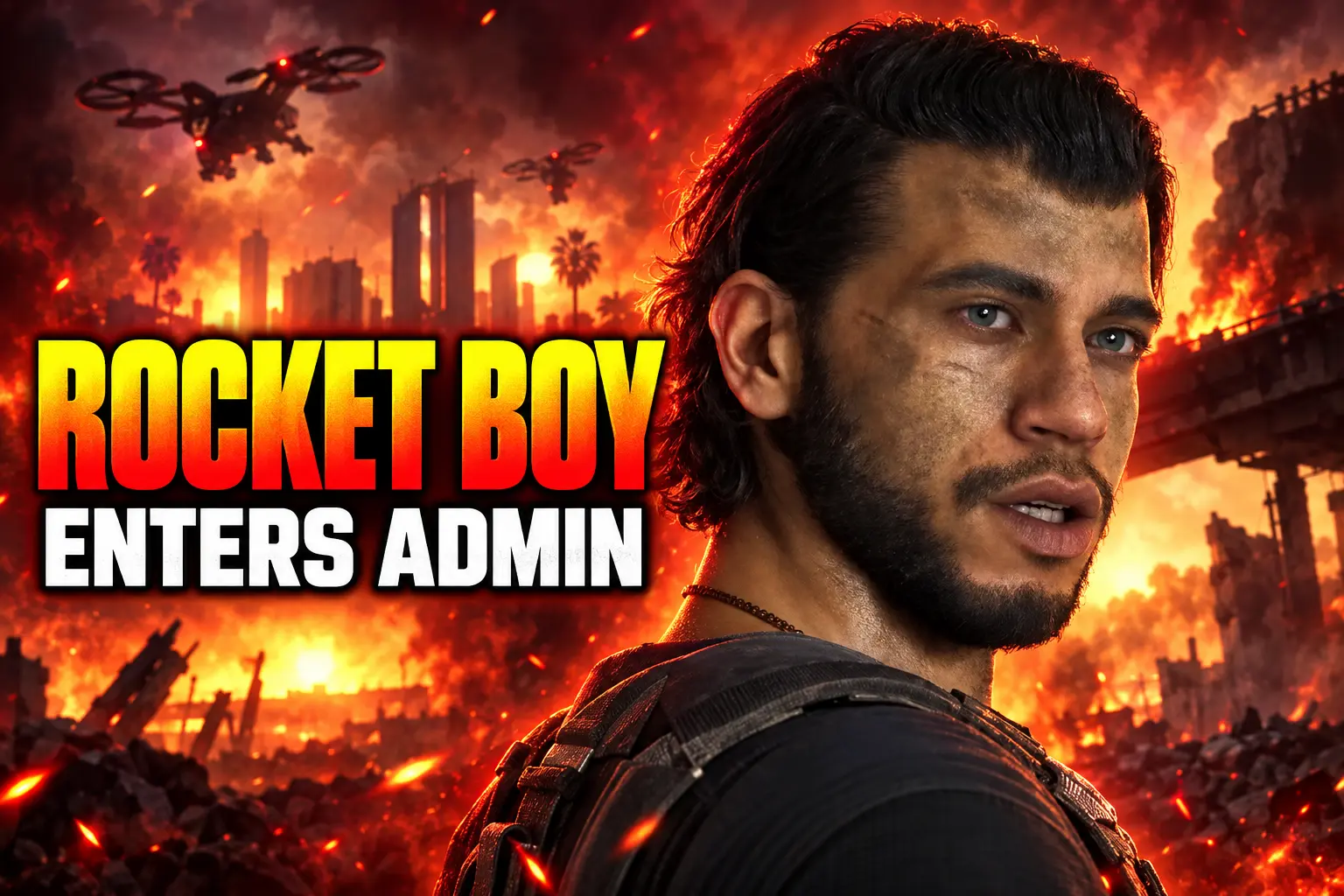
Build a Rocket Boy Enters Administration After the MindsEye Collapse
Build a Rocket Boy is in administration after MindsEye’s flop, board exits, and empty offices, with Opus now holding an insolvent studio and unpaid creditors.

Build a Rocket Boy, the Edinburgh studio behind MindsEye, is in administration after a 25 September 2026 Companies House filing.
The studio confirmed Opus Advisory Group is running the case. Remaining staff had already been told the company was being wound up.
The Edinburgh Studio Is Now in Administration
The firm’s company status is In Administration on its Companies House overview, under number SC537252, with a registered office at 2 Ocean Drive in Leith, Edinburgh. Administration started on 23 September 2026. A form filed two days later records the appointment of an administrator, and that document is still being processed.
The insolvency record names Allister Manson of Opus Restructuring LLP, at 322 High Holborn in London, and Mark Harper, at 9 George Square in Glasgow. Scottish companies need a practitioner on this side of the border. The studio’s own confirmation used the Opus Advisory Group name for the same appointment.
Leslie Benzies, the former Rockstar North president who produced Grand Theft Auto from Grand Theft Auto III through Grand Theft Auto V, founded the company in 2016. It traded as Calex Incorporations Limited, then Royal Circus Limited, and took the Build a Rocket Boy name on 31 October 2018. Co-chief executive Mark Gerhard sat with him on the board that has now lost control of the assets.
THE ROAD INTO ADMINISTRATION
- 6 June 2016: Build a Rocket Boy Ltd is incorporated in Edinburgh.
- 10 June 2025: MindsEye ships on PlayStation 5, Windows, and Xbox Series X and S.
- June and July 2025: Around 300 staff receive at-risk of redundancy notices.
- October 2025: The IWGB Game Workers union starts legal action over how those cuts were handled.
- March 2026: Another redundancy wave lands as IO Interactive Partners ends its publishing tie and the studio repeats sabotage claims.
- April and May 2026: Directors tied to NetEase Games, RedBird Capital Partners, and Galaxy Interactive leave the board.
- 16 September 2026: Remaining employees say they are being let go and the studio is being wrapped up.
- 23 September 2026: Administration starts. Companies House logs the filing on 25 September.
Administration is the legal pause that follows when a company cannot pay what it owes. Control of the business and its property moves to the insolvency practitioners. Benzies and Gerhard no longer run the shop.
Nine Months of Accounts the Cash Could Not Cover
The last group accounts cover the nine months to 30 September 2025, after the firm shortened its year-end from 31 December. They were filed on 6 July 2026. The launch window is inside that period. So is the first collapse in headcount.
THE LAST FILED ACCOUNTS
| Line | Amount | Period |
|---|---|---|
| Turnover | £4.6 million | Nine months to 30 September 2025 |
| Game revenue (booked to Denmark) | £3.5 million | Nine months to 30 September 2025 |
| Development services (USA) | £1.1 million | Nine months to 30 September 2025 |
| Total operating costs | £52.1 million | Nine months to 30 September 2025 |
| Operating loss | £47.5 million | Nine months to 30 September 2025 |
| Net loss | £36.2 million | Nine months to 30 September 2025 |
| Cash at bank | £19.4 million | As at 30 September 2025 |
| Cash at bank a year earlier | £51.9 million | As at 31 December 2024 |
| Creditors | £61.8 million | As at 30 September 2025 |
| Net assets | £10.5 million | As at 30 September 2025 |
Game revenue of £3.5 million sat against wages and salaries of £24.6 million. The group employed an average of 481 people in the period. Creditors due within one year were £25.3 million. Creditors due after more than one year were £36.5 million. Together that is the £61.8 million the studio owed when those accounts closed.
Directors also flagged a preference-share liability of about £17 million becoming payable in the near term, and said they might need funding they did not yet have. Series E shares carried a 12% fixed cumulative dividend. By the period end the unpaid dividend was £1.4 million, and the £16.6 million balance had been moved into amounts due within a year.
On 20 December 2024 a resolution cut the share premium account by £233,229,993, from that figure to zero, and credited the sum to distributable reserves. That pile is the capital record of the money put in before MindsEye shipped. It was not cash left in the bank by September 2025.
Investor Directors Left Before the Filing
NetEase Games, RedBird Capital Partners, and Galaxy Interactive had put money in and taken board seats. Those seats did not survive the summer of 2026.
Companies House shows Yat Keung Li and Chenglin Han terminated as directors on 14 April 2026. Samuel Eli Englebardt went on 26 May. Julia Wittlin went on 31 May. The officer list that remained named Benzies, Gerhard, David Gomberg, and Riaan Henning Hodgson. The accounts name L. P. Benzies as a director and the ultimate controlling party.
IO Interactive Partners, the Danish Hitman publisher, had held the MindsEye publishing rights. That is why the accounts put game revenue in Denmark. The collaboration ended in March 2026, and Build a Rocket Boy took the title in-house. The Blacklisted update followed in April, with Gerhard calling it a big step forward for the game and the studio. Player numbers never recovered enough to fund the wage bill that had already been cut.
The accounts also record related-party purchases in the period of £364,729 from LPBZ Commercial Ltd, a company controlled by Benzies, and £64,325 from Disruptional PubCo, wholly owned by Gerhard. Those sums are small beside the losses. They are still on the ledger an administrator now has to read.
How MindsEye’s Launch Caught Up With the Studio
MindsEye is a single-player action game set in a fictional desert city called Redrock. Players control Jacob Diaz, a former soldier with a neural implant, voiced by Alex Hernandez. The pitch borrowed the open-world language of Benzies’ Rockstar years. The ship date did not.
HOW THE GAME LANDED
- Critic score: Metacritic lists a generally unfavorable critic score of 37 on PC, with PlayStation 5 at 28.
- User score: The same listing shows a user score of 2.5 from 576 ratings.
- Critics’ recommend rate: OpenCritic put the share of critics who recommended the game at 8%.
- Steam peak: Concurrent players peaked at 3,302 on launch day.
Review copies were not sent before release, so critic scores landed after paying players were already in. Crashes and poor performance on PlayStation 5 showed up within days. Sony approved digital refunds, a step it rarely takes. The studio said it was heartbroken that not every player could play the game as intended.
The original plan had been Everywhere, a user-made worlds platform with a toolset called Arcadia, with MindsEye as an episode inside it. Everywhere did not ship. By May 2025 the Everywhere site redirected to MindsEye. Benzies said it would return soon. Administration now sits on top of both projects.
Leadership Blamed Saboteurs Instead of the Build
Shortly before the first mass redundancies, Benzies told an all-staff call that “internal and external” forces had conspired to hinder the release, and that “saboteurs” would be rooted out. When that account was put to the company, it issued a different line.
Leslie and the entire senior management team take full responsibility for the initial launch of MindsEye. The version of the game that was released did not reflect the experience our community deserved.
Build a Rocket Boy, studio statement after the launch
Gerhard later said, without publishing evidence, that “a very big American company” had spent north of €1 million in 2025 “committing criminal activity” against the studio. IO Interactive denied the claims aimed at the wider launch fight. In March 2026, during another cut, the company repeated the charge as “organised espionage and corporate sabotage.”
Staff were not buying it. Former workers described development as chaotic, with “no coherent direction,” and said senior managers did not listen. In early 2026, employees found Teramind monitoring software on work machines without notice. Benzies had framed that kind of watchfulness as a way to stop sabotage. IWGB then opened a separate data-privacy case. More than 90 staff had already signed an open letter in October 2025 demanding an apology and proper pay for people who had been cut.
I don’t think BARB survives this crisis. I believe the end is coming for BARB, and it’s not heralded by saboteurs, but by Mark and Leslie themselves.
Former Build a Rocket Boy staffer, after the MindsEye launch
The saboteur story never found a public that would pay for the game. The cash did. Administration is what the company looks like when the people who put in the raise have left the board and the people who made the game have left the building.
Remaining Staff Were Told It Was the End
Dan Hawkins, principal talent acquisition partner and HR operations lead, had been the first hire into internal recruitment and said he took the studio from 200 people to 550. On 16 September 2026 he wrote that he was raising his green banner “along with the rest of my colleagues at Build a Rocket Boy,” and that he would be “seeing BARB through till the very end, helping wrap things up here in the HR department.”
Level designer Liam Shannon, release manager Michaela Emslie, production QA analyst Cameron Deaves, lead weapon and prop artist Adam Ridsdale, senior VFX artist Jason Waller, and head of audio Stuart Ross, a Rockstar veteran, were among those who said their roles were ending. One source familiar with the studio said the company might not be dissolved even if every remaining worker went. Administration is that shape: an empty operating company still sitting on a register, now run for creditors.
The first cut, within a month of launch, put about 250 to 300 people out. Further rounds followed, including a spring 2026 wave described as about 170 of the 250 then still in post, leaving around 80. In July, former employees protested outside the Leith offices over an expenses-paid fan playtest held on the same date. IWGB’s games section said it was still pursuing justice over how management treated workers.
Everywhere never launched. MindsEye’s online services have no public end date. The last people who could have kept those servers honest were being shown the door in mid-September, a week before Opus took the keys.
What Administration Can Still Do for Creditors
UK insolvency rules put the administrator in charge of the company’s property and set a first aim to rescue a company as a going concern. If that fails, the job is to get a better result for creditors as a whole than a straight winding up. The administrator must send a statement of proposals within eight weeks, to Companies House, creditors, and members.
While that work happens, a statutory moratorium automatically applies, which stops individual creditors from suing for their own cut. Fees come out of the company’s assets. Preferential debts such as wages sit ahead of ordinary unsecured claims. Whether anyone still employed is owed pay is now a question for Opus, not for Benzies’ office.
WHAT THE ADMINISTRATOR CAN TRY
- Keep it trading: Run the company long enough to sell it as a going concern, with clients, code, and orders intact.
- Sell the assets: Move MindsEye, leftover Everywhere work, equipment, and other property for cash.
- Propose a deal: Put a company voluntary arrangement or other compromise to creditors if a thinner studio could still function.
- End in liquidation: If none of that works, wind the company up and close it.
A rescue as a living studio is the first legal aim. The facts on the ground sit against it. The publisher is gone. Investor directors are gone. The last payroll has already been described, by the people on it, as the end.
WHAT WE KNOW
- The legal status: Build a Rocket Boy Ltd is in administration from 23 September 2026, with the appointment filed on 25 September.
- Who is in charge: The studio named Opus Advisory Group. The register names Allister Manson and Mark Harper.
- The last accounts: A £47.5 million operating loss, £61.8 million of creditors, and £10.5 million of net assets at 30 September 2025.
WHAT IS UNCONFIRMED
- A buyer: No purchaser for the studio or the MindsEye intellectual property has been named.
- The game’s servers: No public notice has set an end date for MindsEye online services.
- Staff claims: How much unpaid wage, holiday, or redundancy money sits in the preferential pile has not been published.
Opus now has eight weeks to tell creditors what it plans to do with a studio that already sent its workers home. The appointment form is still being processed at Companies House. Until that PDF lands, the public record is the status line, the dates, and a game that never paid for the company that made it.

Kelly Restored 78 White House Passes, Not the Plane

Delta Adds Venice and Athens Routes as Cities Tighten Access

Build a Rocket Boy Enters Administration After the MindsEye Collapse

King Signs a Candy Crush Union Deal Delayed to 2027

The MAC Wants the Playoff to Count a Win Michigan Kept

Rune Bets on Hillerød for His Achilles Comeback

Permafrost Thaw Runs Fastest in Mountains, Not Arctic Soils

The Last Manual V-12 Lamborghini Cannot Come to America

The Roman Space Telescope Flies After Four Budget Fights

Software Stocks Rally as Underweight Funds Face Dreamforce
-
 NEWS1 month ago
Rune Bets on Hillerød for His Achilles Comeback
-
 NEWS1 month ago
Permafrost Thaw Runs Fastest in Mountains, Not Arctic Soils
-
 AUTO1 month ago
The Last Manual V-12 Lamborghini Cannot Come to America
-
 NEWS4 weeks ago
The Roman Space Telescope Flies After Four Budget Fights
-
 BUSINESS4 weeks ago
Software Stocks Rally as Underweight Funds Face Dreamforce
-

 NEWS1 month ago
Hamilton’s Ferrari Upgrade Pushes Mercedes Into a Monza Bind
-

 BUSINESS4 weeks ago
Influencer Investors Trade Cash Fees for Illiquid Equity
-

 BUSINESS1 month ago
Rubicon Research Q1 Tests Its Specialty Pharma Bet