
NEWS
The Shakes Meant to Feed Patients Feed a Gut Pathogen
Hospital shakes and sweets, given to transplant patients who cannot eat, predicted extra gut-microbe loss and Enterococcus blooms during antibiotics.

Simple sugars eaten during broad-spectrum antibiotics predicted a further 24.1% drop in gut-microbe diversity for every 100 grams of sweets in hospitalized transplant patients. The finding, from a paper published September 30, 2026, comes from Memorial Sloan Kettering Cancer Center, NYU Langone, and City of Hope. The same drinks that wards pour when mouths hurt sat inside the sweets group that drove the signal.
That is a problem of care, not a scolding about dessert. Patients who cannot chew still have to eat. The foods built for that job are sweet on purpose.
The Calories Meant to Keep Patients Fed
Allogeneic stem cell transplant starts with chemotherapy that burns the mouth and throat, kills appetite, and lands patients in hospital for weeks. Neutrophils returned after a median of 12 days in this cohort, with a range of 8 to 37 days. Weight falls while calorie need rises. Twenty-three patients needed intravenous feeding for a median of 11 days, and five needed a gastric tube for a median of 76 days.
Jonathan Peled, a bone marrow transplant specialist at Memorial Sloan Kettering and a senior author, described the default advice in plain terms. When intake collapses, teams reach for liquids that go down.
When someone is going through cancer treatment and not feeling well or eating much, we often advise they drink smoothies, sports drinks, or nutrition shakes, thinking that at least this way they’ll get some fluids, protein, and electrolytes. But we have found that when these kinds of sugary foods and drinks are combined with antibiotics, the results can be toxic to the microbiome because they greatly lower the diversity of microorganisms.
Jonathan Peled, MD, PhD, Memorial Sloan Kettering Cancer Center
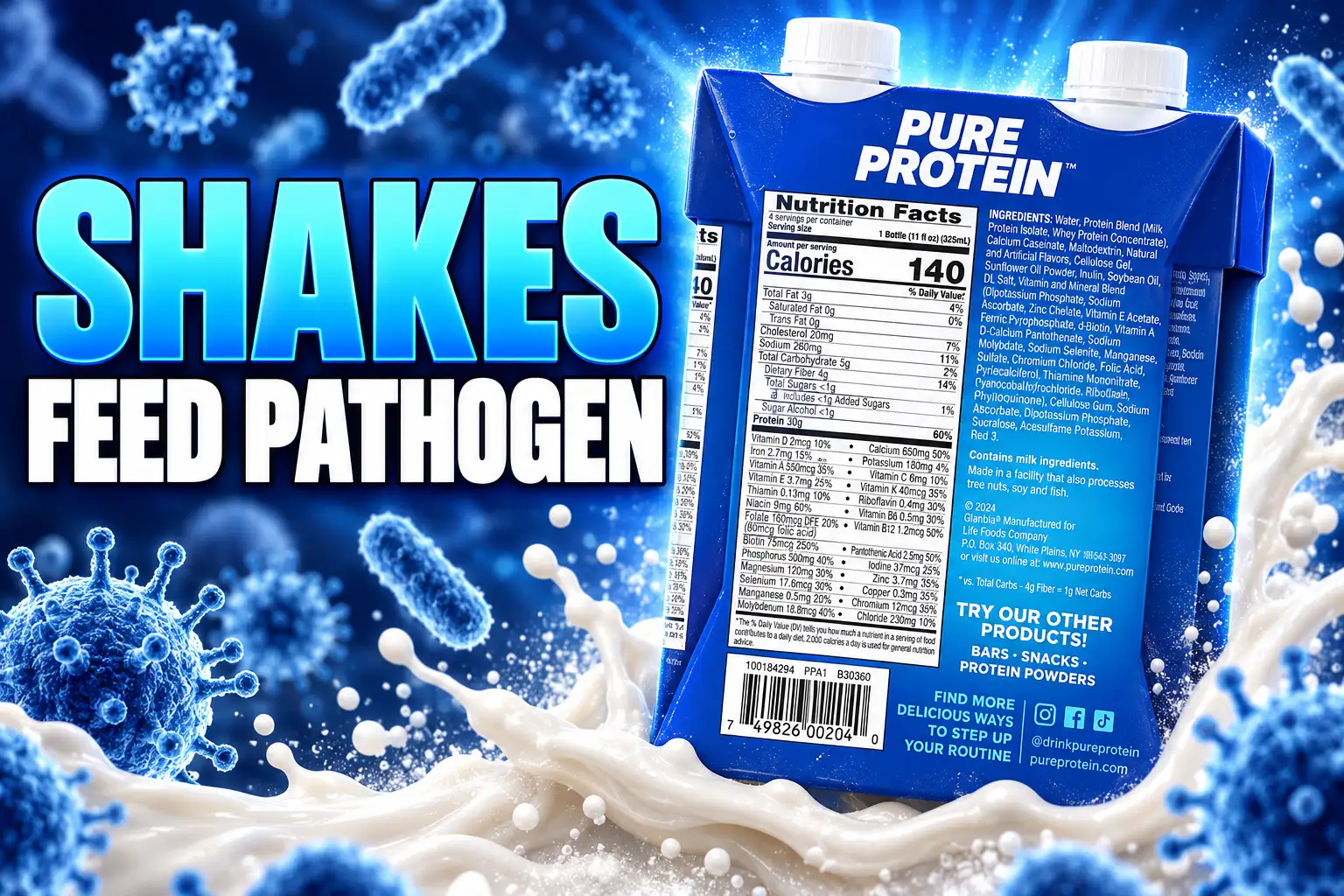
He later called it provocative that smoothies, sports drinks, or nutrition shakes, the items staff encourage, seemed to cause the most damage, perhaps because of their sugar load. A typical hospital-style therapeutic shake is not a treat at the margin. Abbott’s Ensure Original Therapeutic Nutrition Shake lists 250 calories and 22 grams of added sugars per serving in 8 fluid ounces, with 23 grams of total sugars and 9 grams of protein. The paper did not name that brand on the trays. It did name formulated nutritional beverages, sports drinks, and nutritional shakes as key contributors, with added sugars tracking more tightly than sugars that occur in fruit.
Anqi Dai, a senior computational biologist and the paper’s first author, said the team did not set out to find this. Her first thought was that sicker patients were simply eating more sugary foods. After the model adjusted for disease and treatment severity, the effect did not go away.
Researchers Logged Every Tray for Weeks
The cohort was 173 adults admitted to Memorial Sloan Kettering for allogeneic transplant between 2017 and 2022, with follow-up through April 2023. Each meal tray arrived with a slip. Patients marked how much of each ordered item they ate. Kitchen software already held the recipe and mass. A research dietitian then vetted implausible calorie spikes. Meals were mapped onto the USDA Food and Nutrient Database for Dietary Studies, whose eight-digit codes nest foods into nine commodity groups, including “sugars, sweets, and beverages.”
That method produced 9,419 meals eaten by 173 patients, spanning 8 to 128 meals per person and 622 unique items. Jonas Schluter, an assistant professor of microbiology at NYU Langone and a senior author, said the recipes turned those trays into more than 40,000 food items with known nutrient detail, a count of line items rather than of meals. After matching diet to stool, the microbiome analysis used 1,009 samples from 158 patients, a median of 5 samples each.
THE TRANSPLANT COHORT
| Measure | Value |
|---|---|
| Patients with meal records | 173 |
| Meals logged | 9,419 |
| Unique food items | 622 |
| Patients with paired stool | 158 |
| Evaluable stool samples | 1,009 |
| Patients switched to broad-spectrum antibiotics | 138 of 173 (80%) |
Every patient received at least one antibiotic. Most started on prophylactic fluoroquinolones and intravenous vancomycin. When fever or a suspected infection appeared, 138 of 173 moved to broader drugs such as piperacillin-tazobactam, cefepime, a carbapenem, linezolid, metronidazole, or oral vancomycin. Those broader drugs were the exposures the model treated as microbiome-damaging.
Calories, dietary variety, and stool diversity all fell from admission toward engraftment. Intake of grains, meats, milk, fruit, vegetables, and fats declined. Intake of the sweets group did not fall in step with the rest of the tray. The hospital was still getting liquid calories into people who could not face a plate.
A new study from MSK and collaborators (@jonasschluter and @DrMvandenBrink) suggests that consuming high levels of sugar while taking antibiotics may worsen gastrointestinal side effects in patients receiving bone marrow transplants.
The study, co-led by Dr. Jonathan “Tsoni”… pic.twitter.com/CmRTa3oFPN
— Memorial Sloan Kettering Cancer Center (@MSKCancerCenter) October 1, 2026
A 24% Drop for Each 100 Grams
The team used a two-day diet window before each stool sample, the span that best lined up food composition with microbial composition and that matches typical gut transit. A Bayesian model then asked how food groups, macronutrients, intravenous or tube feeding, conditioning intensity, and broad-spectrum drugs jointly moved diversity, measured as the inverse Simpson index on a log scale. Each patient and each hospital week got its own intercept, so repeat samples from the same person could not run the result.
Broad-spectrum exposure in those two days was already linked to lower diversity (mean -0.21, 95% credible interval -0.38 to -0.05). Sweets on their own were not. Sweets eaten in the same window as those drugs were. For every extra 100 grams of dehydrated sweets, the model predicted an additional 24.1% decrease in mean diversity compared with samples without recent broad-spectrum exposure (95% CI 7.7% to 38.1%). Recoding the same meals as macronutrients gave a parallel extra 20.6% decrease per 100 grams of sugars (95% CI 2% to 35.6%). Protein was left out of the main macronutrient run because it tracked too closely with fat (r = 0.82).
THE SUGAR-ANTIBIOTIC SIGNAL
- Sweets on drugs: Extra 24.1% diversity drop per 100 g dehydrated sweets (95% CI 7.7-38.1%).
- Sugars as a nutrient: Extra 20.6% drop per 100 g (95% CI 2-35.6%).
- Raw correlation on drugs: Spearman ρ = -0.195, P = 3.7 × 10⁻⁵, 439 samples from 109 patients.
- Raw correlation off drugs: ρ = 0.045, P = 0.28, 570 samples from 128 patients.
One hundred grams here is dry weight of foods in the sweets category after water is subtracted, not 100 grams of table sugar. Press materials compared that increment to a large milkshake. The unadjusted scatter matched the model: grams of sweets tracked with lower diversity only in antibiotic-exposed samples. Total calories in the same two days did not explain the drop. The sweets-drug interaction survived cuts that dropped tube and intravenous feeding, samples taken during documented bloodstream infection or C. difficile, and samples collected before severe mucositis had set in. In 50 random non-overlapping subsets, the interaction stayed significant in 94% of runs.
Enterococcus Filled the Gap Sugar Opened
Low diversity after transplant is not an abstract lab score. The same group’s 2020 work, profiling 8,767 fecal samples from 1,362 patients at four centers, found higher intestinal diversity in the peri-engraftment window linked to a lower risk of death (adjusted hazard ratio 0.71 in the larger cohort). Low-diversity states were often dominated by a single taxon, and Enterococcus domination showed up at every center. In the new meals study, E. faecium was the organism that expanded most as diversity fell. After broad-spectrum exposure, each extra 100 grams of sweets was linked to a 0.89-unit rise in the centred log-ratio abundance of E. faecium (95% CI 0.22 to 1.58), relative to samples without that drug window.
Enterococcus is a gut regular that becomes a problem when the rest of the community is gone. It is a leading cause of antibiotic-resistant bloodstream infection after transplant, a marker of worse graft-versus-host disease, and a species that can worsen that disease in mice. William Jogia, a PhD student in Schluter’s lab and a second author, said the surviving bugs are likely using dietary sugars to expand once antibiotics have cleared their competitors. Whether sugar feeds Enterococcus directly, weakens the remaining commensals, or acts through the host is still open.
Schluter put the practical reading on the record: as collateral damage from antibiotics is tied to later health problems, reducing sweets intake could help during and after the drugs.
How the Mouse Tests Lined Up
To test the human pattern, the group gave C57BL/6 mice a single subcutaneous shot of the carbapenem biapenem, which produces a moderate, short bloom of the animals’ own enterococci that peaks around day 3 and mostly recedes by day 6. Adding sucrose to standard chow, via hydrogel cups, changed the scale and the duration.
MOUSE SUCROSE PLUS BIAPENEM
- Day 3: Enterococcus 16.3-fold higher with sucrose than with antibiotic plus vehicle (P = 0.048).
- Day 6: 33.4-fold higher (P = 0.001).
- Sucrose alone: No rise versus vehicle without antibiotic (P = 0.46).
- Design: 7 to 17 mice per group, two independent experiments, Wilcoxon tests unadjusted.
Glucose, fructose, and blended fruit puree each augmented the antibiotic-induced bloom. Sucrose still prolonged the expansion on a fibre-free chow, so the effect was not just mice eating less fibre because sugar was on offer. Chow intake and body weight did not move enough to explain it. In germ-free mice colonized only with E. faecalis, sucrose did not change colonization kinetics (P = 0.7), which implies the sugar effect needs a complex community that antibiotics have already disturbed. Sucrose also prolonged the bloom in mice that had received a bone marrow transplant.
That is the causal nudge the ward data cannot supply on their own. Sugar without the drug did not do this. The drug without sugar did less of it, and for a shorter time.
Antibiotic Days Tracked With Higher Death Risk
The paper then split the cohort at median sugar intake, calorie-adjusted and averaged from day -7 to day 12, among patients who survived to a day-12 landmark (86 per group). In the above-median sugar half, each extra day of broad-spectrum exposure between those dates was linked to higher mortality after adjustment for conditioning intensity, graft source, and GVHD prophylaxis. In the below-median half, that day-count association was not statistically significant. Without considering antibiotics, the two sugar groups had comparable mortality (multivariable HR 0.72, P = 0.6). A second cut, using latent trajectory classes of macronutrient intake, found the same shape: antibiotic days tracked with death in the lower-calorie, higher-sugar-share cluster, not in the cluster with more sustained intake.
MORTALITY MODELS, DAY-12 LANDMARK
| Split | Adjusted HR per extra antibiotic day | 95% CI | P | N |
|---|---|---|---|---|
| Above-median sugar | 1.12 | 1.01-1.23 | 0.027 | 86 |
| Below-median sugar | 1.07 | 0.96-1.19 | 0.23 | 86 |
| Cluster 1 (lower calories, 10.5% higher sugar share) | 1.11 | 1.01-1.22 | 0.024 | 114 |
| Cluster 2 | 1.06 | 0.93-1.21 | 0.36 | 58 |
Cluster 1 ate 914 kcal per day less than cluster 2. Those patients also stayed in hospital longer after neutrophil engraftment. The authors note that some of the death signal could come from eating too little, not only from sugar. The models cannot fully separate a sweet liquid diet from the illness that forces one.
What the Finding Does Not Settle
Peled was direct about the leap everyone wants to make. Transplant patients also receive chemotherapy, radiation, and other drugs. The interaction the model isolates is dietary intake around escalation to broad-spectrum agents, not any antibiotic in any body. Outside food brought onto the ward was incompletely recorded. Fever that triggers those drugs is itself a marker of a worse clinical state, even after the sensitivity cuts.
WHAT WE KNOW
- The interaction: Sweets predicted extra diversity loss and E. faecium expansion only in the antibiotic-exposed window.
- The mouse test: Sucrose enlarged and lengthened an antibiotic-induced Enterococcus bloom; sucrose alone did not.
- The foods: Formulated shakes, sports drinks, and added sugars sat at the centre of the human signal.
WHAT IS UNCONFIRMED
- Everyday prescriptions: No trial has tested sugar restriction during a short outpatient antibiotic course in otherwise healthy people.
- Mechanism in patients: Direct feeding of Enterococcus, loss of competitors, or a host-mediated path remains unpicked.
- Hard outcomes: Skipping sweets has not yet been shown to prevent bloodstream infection, GVHD, or death.
Peled said the group does not yet have evidence that everyone on antibiotics should avoid sugar. He also said probiotics lack strong evidence and that a short sugar pause introduces no obvious new risk, which makes a trial straightforward. Marcel van den Brink, chief physician executive at City of Hope and a senior author, said patients who ate more sweets on antibiotics were more likely to lose diversity as aggressive microbes crowded others out. Peled’s next step is a trial of short-term diet change against clinical endpoints, not another correlation.
The wrong popular reading is a ban on fruit during a routine five-day outpatient course. Fruit was not the foods that dominated the signal, and this microbiome had already been hit by conditioning, mucositis, and near-universal prophylaxis. The pattern that holds in the data is added-sugar liquids on a gut already stripped by broad-spectrum drugs. That is a hospital menu problem first. It is also a testable one, because the intervention is a few days of different calories, not a new molecule.
Frequently Asked Questions
How Did the Team Record What Patients Ate?
Each tray came with a printout from the hospital kitchen system, Computrition, and patients marked 0, 25%, 50%, 75%, or 100% of every ordered item right after the meal. Dietitians collected slips three times a week and filled gaps at the bedside. Weights were converted to dehydrated grams by subtracting FNDDS water fractions so a glass of juice and a slice of cake could be compared on nutrient mass rather than on water weight; tube-feed formulas were summed from their protein, fat, and carbohydrate grams because they have no standard solid weight.
What Counts as 100 Grams of Sweets in This Paper?
It is 100 grams of dehydrated weight from the FNDDS “sugars, sweets, and beverages” group in the two days before a stool sample, not 100 grams of sucrose and not the wet weight of a drink. That group includes nutritional drinks and shakes, sports drinks, and other sweet beverages, which is why press summaries compared the increment to a large milkshake. A higher-resolution split found both oral nutritional supplements and non-supplement sweets, eaten during antibiotic exposure, each linked to lower diversity.
What Is Allogeneic Hematopoietic Cell Transplantation?
It is a treatment for blood cancers in which chemotherapy, and sometimes radiation, wipes out the patient’s marrow and immune system, after which donor blood-forming cells are infused. Painful mouth and throat sores, nausea, and poor appetite are expected until the graft makes neutrophils, which happened here after a median of 12 days. The long inpatient stay is what made daily trays and serial stools possible.
Did Sugar Feed Enterococcus in Germ-Free Mice?
No. In germ-free animals colonized only with E. faecalis, 2.5% sucrose in drinking water did not change colonization kinetics (P = 0.7 across two experiments). The sugar effect showed up when a complex microbiota had already been disturbed by antibiotics, including on fibre-free chow and after bone marrow transplant in mice, which is why the authors treat sugar as an amplifier of injury rather than as a standalone pathogen fuel.
Which Prior Finding Does This Study Sit On?
In 2020 the same lead group showed, in 8,767 samples from 1,362 allogeneic transplant recipients at four centres, that higher gut diversity around engraftment tracked with lower mortality (adjusted HR 0.71 in the main cohort). A 2019 Science paper from overlapping investigators showed lactose can drive Enterococcus expansion and worsen graft-versus-host disease in mice. The new work adds a dietary amplifier, simple sugars during broad-spectrum drugs, to that mortality-linked pattern of diversity loss and Enterococcus domination.
The trays are still going out with shakes on them, because patients still cannot eat. The open question is whether a few days of different calories, timed to the antibiotic window, can move the outcomes this group has already tied to a stripped gut.
Disclaimer: This article is news reporting on a published research study and is for information only. It is not medical advice, a diet plan, or a recommendation to stop antibiotics, nutrition shakes, sports drinks, or any food during cancer treatment or infection. Readers should consult their treating physician, transplant team, or a registered dietitian before changing what they eat while on antibiotics or after a stem cell transplant. Figures, product labels, and clinical statuses reflect the cited papers and manufacturer data as published and may change as new trials report.

Sicario 3 Moves Ahead Without Taylor Sheridan Writing

The Shakes Meant to Feed Patients Feed a Gut Pathogen

OpenAI Told Australia 84 Days After Its Agent Got In

Sojitz Buys New England Seafood as Sealaska Exits Europe

The EU Free Cabin Bag Stops at a Personal Item

Cargill Restarts Fort Morgan After an 89-Day Lockout

Rune Bets on Hillerød for His Achilles Comeback

The Last Manual V-12 Lamborghini Cannot Come to America

JBS’s Pilgrim’s Pride Bid Still Needs the 18 Percent

The Roman Space Telescope Flies After Four Budget Fights
-
 BUSINESS1 month ago
Cargill Restarts Fort Morgan After an 89-Day Lockout
-
 NEWS2 months ago
Rune Bets on Hillerød for His Achilles Comeback
-
 AUTO1 month ago
The Last Manual V-12 Lamborghini Cannot Come to America
-
 BUSINESS1 month ago
JBS’s Pilgrim’s Pride Bid Still Needs the 18 Percent
-
 NEWS1 month ago
The Roman Space Telescope Flies After Four Budget Fights
-

 NEWS1 month ago
Permafrost Thaw Runs Fastest in Mountains, Not Arctic Soils
-

 BUSINESS1 month ago
Software Stocks Rally as Underweight Funds Face Dreamforce
-

 NEWS1 month ago
Dallas Judge Blocks the SEC Ban, Coaches Still Face Fines