
NEWS
The Latest DASH Sprint Unhooks Joint C2 Software
A July 2026 DASH experiment put a Space Force Guardian over Air Force battle managers and tested a government-owned software bus that swaps AI vendors.

The Department of the Air Force used a two-week DASH experiment in July 2026 to put a Space Force Guardian in charge of Air Force battle managers and industry software teams. The 505th Command and Control Wing said on Sept. 8, 2026, that artificial intelligence handled the heavy data work so the crew could decide faster on a joint command-and-control floor.
Under the apps sat a quieter test. An Air Force Research Laboratory software layer, owned by the government, let competing vendor tools plug in and drop out so the force is not stuck with one closed design.
A Space Force Guardian Ran the Air Floor
The integrated crew at the 805th Combat Training Squadron’s Shadow Operations Center-Nellis was led by a U.S. Space Force Guardian, working with Air Force battle managers and industry developers. The 505th called the event a whole-of-lab effort, co-led by the Advanced Battle Management System Cross-Functional Team and AFRL, with measured human-factors work from the 711th Human Performance Wing.
Maj. Erik Murdock, Operations Division chief of the 57th Space Aggressor Squadron, said the point of that mix was a shared job, not a service brand.
As a joint force, we operate as a single, cohesive team focused on the exact same objective. It isn’t about the ‘Air Force way’ or the ‘Space Force way’; it is about the ‘warfighting way.’ Because while our domains are different, our decision-making challenges are identical. This experiment demonstrated that when you give a joint team common objectives and a shared set of tools, the integration happens naturally.
Maj. Erik Murdock, 57th Space Aggressor Squadron Operations Division chief, 505th Command and Control Wing
Dr. Elizabeth Frost, the AFRL DASH lead, said the 711th’s data matched what the operators felt. Both Airmen and Guardians, she said, have to pull together large, messy feeds and rank actions under time pressure, and a well-built human-machine team can free some of that mental load. The claim is operational, not ceremonial: if the hard part of C2 is the same in air and space, a Guardian can run an air floor without a custom stack.
That is a step past May 2026, when Guardians first sat beside Airmen in the Multi-Decision Advantage Sprint for Human-Machine Teaming, or MASH, after earlier DASH events where they mostly watched. This July they had the lead.
The Air Force Owns the Plug
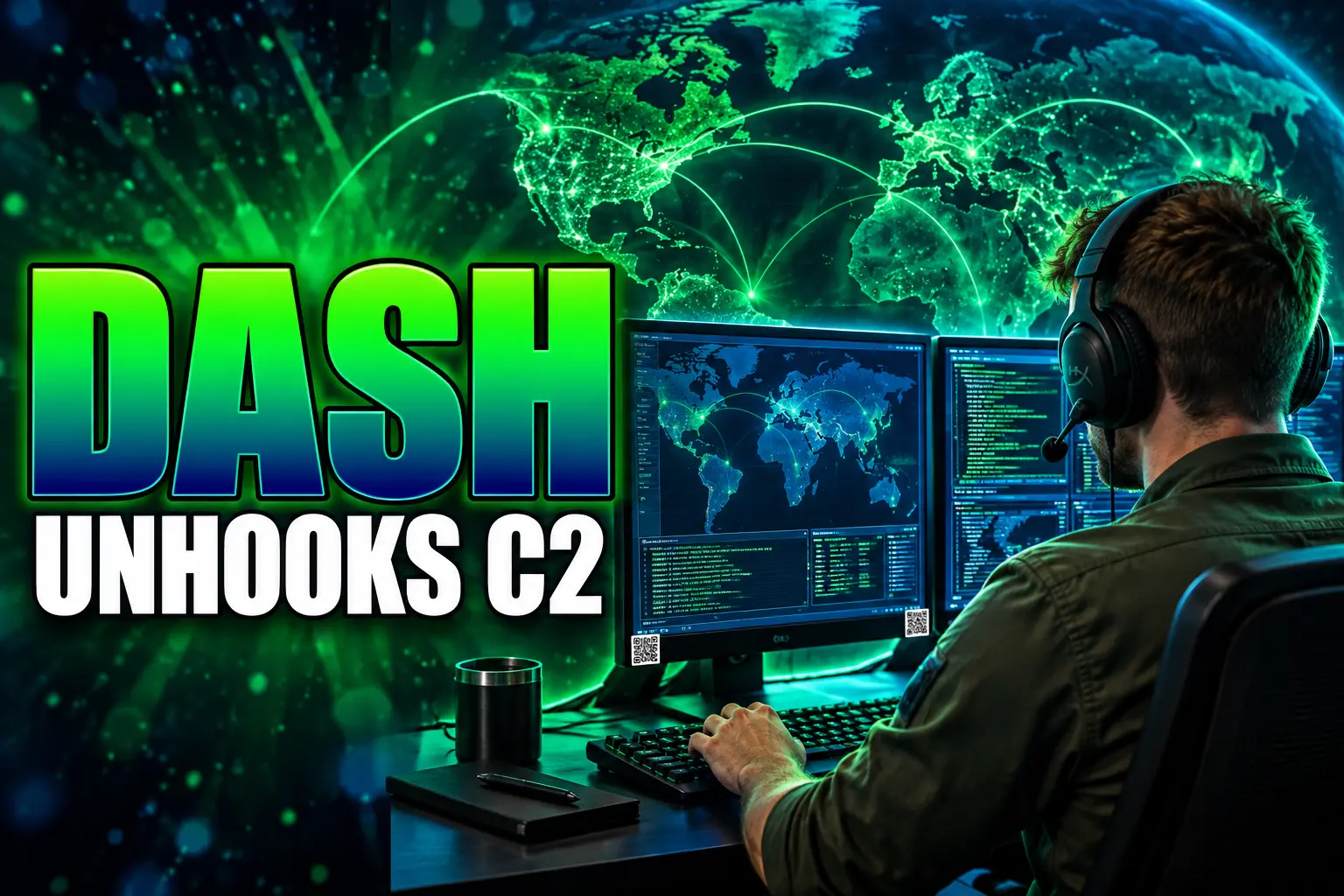
The technical backbone was an AFRL-built orchestrator, a government-owned software interface that let several competing industry apps run in a modular setup. Kevin McFarland, project management lead in AFRL’s Advanced Capabilities Directorate, treated that bus as the milestone, not another dashboard.
Successfully demonstrating this ‘plug-and-play’ ecosystem was a critical milestone. Government ownership of the orchestrator significantly decreases integration bottlenecks. We are no longer locked into a single vendor’s closed architecture.
Kevin McFarland, AFRL Advanced Capabilities Directorate project management lead, 505th Command and Control Wing
Ryan Hilliard, C2 research area lead in AFRL’s Information and Spectrum Warfare Directorate, said the lab’s own scoring software compared baseline runs with vendor runs in real time, so operators and coders could see process metrics on each trial. Developers sat on the operations floor, which turned each trial into an immediate rewrite instead of a report filed after the event.
That design matches what the Department of the Air Force Program Executive Office for Command, Control, Communications, and Battle Management says the DAF Battle Network has to do: add new software, algorithms, and data flows at low switching costs for new software so the department can keep up with commercial tools. Lt. Col. Corey Ellsworth, ABMS Cross-Functional Team integration lead, said the unclassified lab was built so a tool that passes here can move onto the classified networks Airmen and Guardians would use in a high-end fight.
Defense software shops already read each DASH statement of work as a map of what the department will buy next, because the sprints name the exact decision a microservice has to make. A government bus makes that market real: the winner of one sprint can be pulled and replaced at the next one.
What Earlier DASH Sprints Measured
The U.S. Air Force framed 2026 as a continuation year in January, after three 2025 sprints and before MASH combined those tools.
The Air Force launches 2026 DASH experiments, building on lessons learned from last year! Human-machine collaboration & cutting-edge AI tools are shaping our future.
Dive into the details 👇https://t.co/rVaVLVjCRz
— U.S. Air Force (@usairforce) January 6, 2026
The July 2026 DASH did not publish a new timing multiple. The earlier sprints did, and those figures are why the department now talks about swapping apps instead of proving that a machine can suggest a target at all.
DASH RESULTS ON THE CLOCK
| Sprint | When | Decision job | Published result |
|---|---|---|---|
| DASH 1 | April 2025 | Perceive Actionable Entity | Seven-fold faster average decisions; more than twice the dilemmas; three times the valid solutions |
| DASH 2 | July 2025 | Match effectors | Recommendations in less than 10 seconds; 30 times more options; two vendors each more than 6,000 solutions for about 20 problems in 1 hour |
| DASH 3 | September 2025 | Battle courses of action | Under one minute; best machine-class solutions at 97% viability versus about 19 minutes and 48% for humans |
| MASH | May 2026 | PAE, match effectors, and COAs together | First Guardian operators on the floor; taskings that took nearly an hour finished in 5 minutes |
| Latest DASH | July 2026 | Modular target-action and COA tools, game-theory problems | Guardian-led crew; government-owned orchestrator; no new timing figure |
Col. Christopher Cannon, then the ABMS Cross-Functional Team lead, said after the first sprint that the seven-fold drop in decision time came with machine errors on par with human error after a week of coding. Four industry teams and a ShOC-N coding team built those tools around Perceive Actionable Entity, the choice of which actions are possible, allowed, and worth taking against a target, a rescue, or a resupply.
DASH 2, still in downtown Las Vegas, asked six industry teams and one ShOC-N team to match effectors, the choice of which weapon or force best produces a chosen effect. Col. John Ohlund, ABMS CFT director, said two vendors each produced more than 6,000 solutions for about 20 problems in one hour, and that a single algorithm change would have lifted recommendation validity from 70 percent to more than 90 percent.
DASH 3 brought in Canadian and British operators and asked the machines to build multi-path battle courses of action. Ohlund said the tools produced machine COAs in under one minute while weighing risk, fuel, time, force packaging, and routing, with the best machine-class solutions at 97 percent viability and tactical validity. Human COAs in the same comparison took about 19 minutes, with 48 percent judged viable. First Lt. Ashley Nguyen, a 964th Airborne Air Control Squadron participant, said she started the event skeptical and then treated many outputs as about 80 percent solutions, a starting point rather than a finished order.
Ohlund’s own example is the thing the software actually does. A bomber may be able to attack from several avenues, each with different risk and a different mix of cyber, intelligence, refueling, and air-defense suppression. Machines can spin those paths at once so some stay on the table as the fight moves.
Thirteen Battle-Management Choices, One Software Bus
ABMS did not start these sprints with a platform buy. It started with a model that breaks command and control into discrete choices a human-machine team has to make. SAM.gov materials for the first DASH describe 13 battle-management subfunctions in the model, built on a few blunt assumptions: no two entities share the same state at once, forces are not spread evenly, the fight changes over time, information is incomplete, and resources are tight.
The 2025 and 2026 sprints have so far coded three of those jobs, then wired them together.
THE JOBS ALREADY CODED
- Perceive Actionable Entity: Decide which actions are possible, allowed, and worth taking against an operational entity, from a strike to a rescue to a resupply.
- Match effectors: Given a list of desired effects, rank the capability or mix of capabilities best suited to each one, then repeat for the rest.
- Generate battle COAs: Take those matched pairs and add the extra support, timing, and routing needed through the execution window, then repeat for the next-ranked pair.
MASH in May 2026 was the first time those three ran as an ensemble, using tools from the first three DASH events, with AFRL’s orchestrator passing data, ontologies, and metadata among companies that did not build a shared product. Photo captions from the July 2026 sprint say military and industry teams were again building modular tools that automate target-action recommendations and generate rapid courses of action, now with a Guardian in the lead chair and with problems written to include trade-offs that have no clean right answer.
Vendors Sit on the Operations Floor
The July sprint ran at ShOC-N, Air Combat Command’s JADC2 battle lab at Nellis Air Force Base, Nevada. Scenarios came from the squadron’s own veteran operators, more than 50 years of tactical and operational C2 experience among them, including geography, logistics, and live changes to the rules of engagement. Lt. Col. Wesley Schultz, who took command of the 805th on May 29, 2026, said the problems were not a video-game script.
Industry teams were not named, a pattern that has held since DASH 1. Jeffrey Palumbo, AFRL’s C3BM capability area lead, called the series a user-producer co-creation loop: proof of concept, early operator feedback, and “chunks of warfighting capability” delivered in a repeatable cycle. Col. Rowland Cardoni, chief of the C3BM Operational Response Team, said the AFRL hookup lets his team project which lab tools can move onto the broader Department of the Air Force Battle Network.
WHAT WE KNOW
- The dates: The two-week sprint was photographed in Las Vegas on July 22 and 23, 2026, and described by the 505th on Sept. 8, 2026.
- The crew: A Space Force Guardian led Air Force battle managers and industry developers on the ShOC-N floor.
- The bus: AFRL’s government-owned orchestrator ran competing apps in a modular setup with live scoring on each trial.
- The problem set: Ohlund said this event used game-theory problems in which operators had to weigh trade-offs with no perfect answer.
WHAT IS UNCONFIRMED
- Vendor names: The 505th still has not identified the companies on the floor.
- A new speed multiple: Unlike DASH 1 through MASH, this account includes no fresh timing figure.
- Classified fielding: Ellsworth and Cardoni describe a path onto secret networks; they did not say any July tool has completed that move.
Schultz called the sprints the biggest shift in battle management in his career, a claim that sits next to a still-open handoff. The unclassified downtown lab is how vendors get in the room. The classified Battle Network is where the crew would actually fight.
Game Theory Comes After the Easy Problems
Once machines could suggest a target, pick a shooter, and draft a course of action faster than a human-only cell, the next test was a worse kind of problem. Ohlund said the July sprint pushed operators past simple, reactive cases and into ambiguous ones, and that this line of work will continue.
The future of battle management isn’t just about accelerating our reaction time; it’s about fundamentally changing how we make decisions. The experimentation focused on game theory and will continue in future experiments, too. We are moving beyond simple, reactive scenarios and presenting our warfighters with complex, ambiguous problems where they must be proactive, weigh trade-offs, and make decisions when there is no perfect answer. This approach is essential for developing the cognitive superiority our joint force needs to out-think and outmaneuver a peer adversary in a high-end conflict.
Col. John Ohlund, ABMS Cross-Functional Team director, 505th Command and Control Wing
That is the second product of the July floor, sitting beside the orchestrator. If C2’s mental load is domain-agnostic, a Guardian can lead Airmen on a shared toolset. If the government owns the bus, those tools can be swapped when a better vendor shows up. Future sprints, Ohlund said, will keep using game-theory problems, while Cardoni’s team maps which lab code can move onto the classified Battle Network.
Frequently Asked Questions
What Is a DASH Experiment?
Each Decision Advantage Sprint for Human-Machine Teaming is a two-week coding event at an unclassified lab in Las Vegas, first at the Howard Hughes Operations Center and later at ShOC-N’s downtown site, so vendors can work without a classified network. The ABMS Cross-Functional Team and AFRL host the sprints one decision function at a time, then combine those functions, as they did at MASH in May 2026.
What Is the Shadow Operations Center-Nellis?
ShOC-N is the 805th Combat Training Squadron’s battle lab at Nellis Air Force Base, with about 80 enlisted Airmen, 30 officers, 60 civilians, and 47 contractors assigned. The squadron was redesignated on July 3, 2019, and reactivated on Aug. 1, 2019, as Air Combat Command’s focal point for joint all-domain C2 experiments, rapid development, and test support.
What Is the Transformational Model for Decision Advantage?
It is an ABMS model, developed with model-based systems engineering, that treats command and control as a set of specific choices a human-machine team must make and the battlespace information those choices need. SAM.gov materials list 13 orthogonal battle-management subfunctions and state that the requirements are meant to stay useful across time, geography, organization, and doctrine.
Did DASH Events Include Allied Operators?
DASH 1 paired Total Force crews with Royal Canadian Air Force air battle managers. DASH 3 added the United Kingdom, and Royal Canadian Air Force Capt. Dennis Williams said the next fight cannot be won without machine teammates and allies. Lt. Col. Shawn Finney, then 805th commander, said the unclassified setup is a low barrier for partners; the July 2026 505th account did not list coalition crews.
What Is the DAF Battle Network?
It is the Air Force and Space Force system-of-systems for command, control, and battle management, the department’s piece of Combined Joint All-Domain Command and Control. The secretary of the Air Force created the C3BM program executive office in September 2022 as the integrating buyer and the department’s single technical interface to that joint effort, with a best-of-breed rule for adding and dropping tools.

The Latest DASH Sprint Unhooks Joint C2 Software

Celeste Rivas Family Sues D4vd and His Inner Circle

Calling AI Agents Autonomous Will Not Shift the Blame

Labor Day Gas Hits $4.15 as Diesel Sets a Record

Aispace Opens an Agent File Drop Outside Chat

Rune Bets on Hillerød for His Achilles Comeback

Permafrost Thaw Runs Fastest in Mountains, Not Arctic Soils

The Roman Space Telescope Flies After Four Budget Fights

Software Stocks Rally as Underweight Funds Face Dreamforce

Hamilton’s Ferrari Upgrade Pushes Mercedes Into a Monza Bind
-
 NEWS1 month ago
Rune Bets on Hillerød for His Achilles Comeback
-
 NEWS3 weeks ago
Permafrost Thaw Runs Fastest in Mountains, Not Arctic Soils
-
 NEWS2 weeks ago
The Roman Space Telescope Flies After Four Budget Fights
-
 BUSINESS2 weeks ago
Software Stocks Rally as Underweight Funds Face Dreamforce
-
 NEWS1 month ago
Hamilton’s Ferrari Upgrade Pushes Mercedes Into a Monza Bind
-

 AUTO3 weeks ago
The Last Manual V-12 Lamborghini Cannot Come to America
-

 BUSINESS2 weeks ago
Influencer Investors Trade Cash Fees for Illiquid Equity
-

 NEWS3 weeks ago
Kuminga Picks Minnesota Over a Richer Lakers Offer