
BUSINESS
Influencer Investors Trade Cash Fees for Illiquid Equity
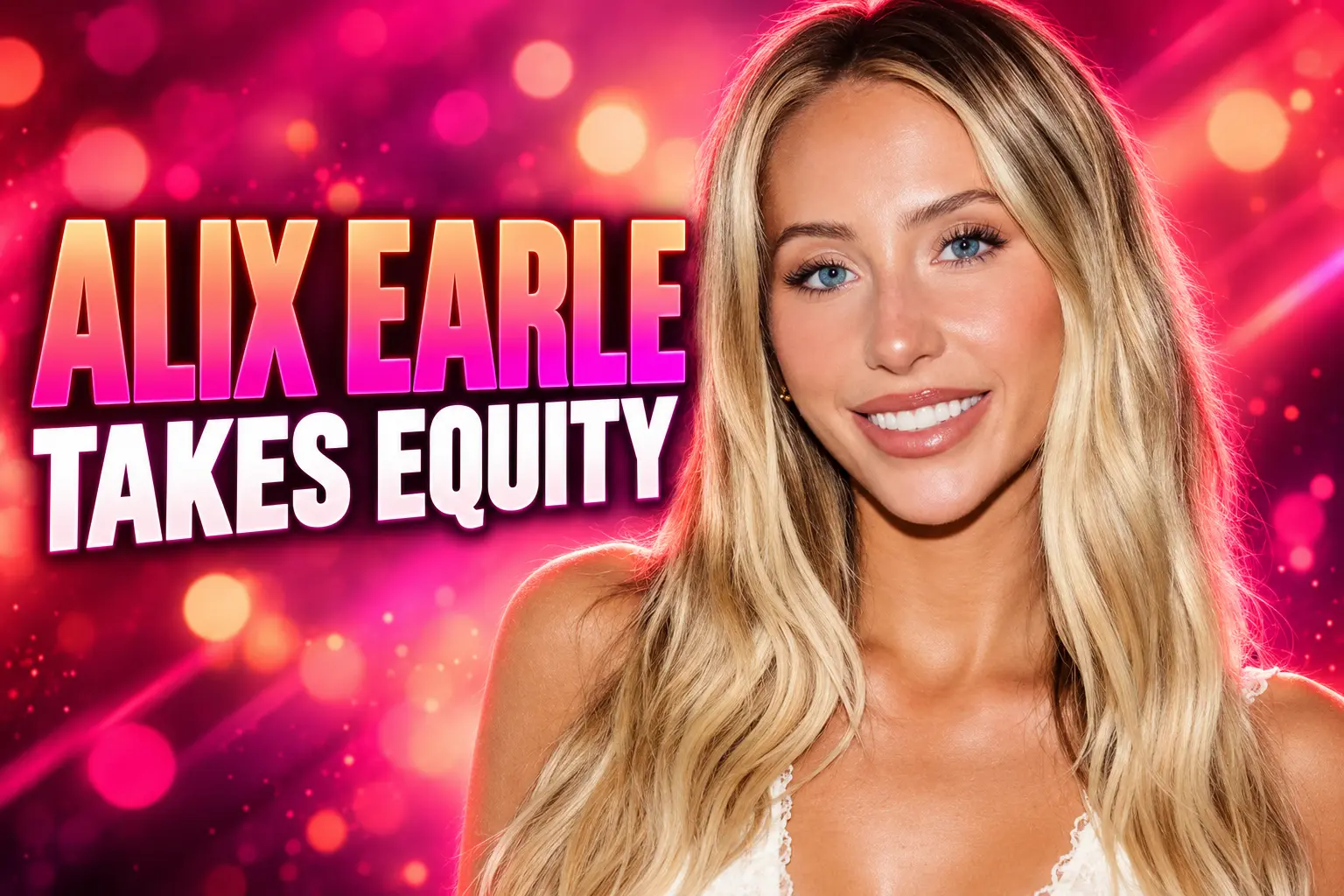
Alix Earle’s Cymbiotika stake shows influencer-investors trading cash for illiquid equity and a title that turns every mention into a financial interest.

Alix Earle joined Cymbiotika as an investor last month, adding a supplement maker to a portfolio that already includes a soda PepsiCo bought. The 25-year-old now holds stakes she can talk about to 14.5 million followers across Instagram, TikTok and YouTube. The check size was not disclosed.
The faces are on the apps. The new machinery sits one layer back, at talent agencies and invite-only syndicates that spent years taking a cut of cash deals and now want a claim on the company.
A $1.95 Billion Soda Sale Set the Template
Earle took equity in Poppi in 2024 as part of the partnership, not as a side hobby. PepsiCo closed the Poppi purchase for $1.95 billion on May 19, 2025, a figure that includes $300 million of expected cash tax benefits and a net price of $1.65 billion, plus a performance earnout. Chris Hall, Poppi’s chief executive, called the sale “a tremendous validation of the work we’ve done to advance our mission.”
The can itself is a low-sugar soda with prebiotics, fruit juice and apple cider vinegar, no more than 5 grams of sugar per serving, sold in 15 flavors. PepsiCo’s own release leaned on the brand’s TikTok campaigns and influencer partnerships as much as the formula. That is the template now being copied: put the person who can move the product on the cap table before a larger buyer shows up.
Cymbiotika is the next line in that book. Durana Elmi, a cofounder, said Earle is “honest about what her routine looks like day to day, and now she’s an investor helping to shape where we go next.” Earle said she had used the brand’s glutathione, colostrum and vitamin C “for years, because they’re the only supplements that have actually kept up with my schedule.” She already holds Gorgie, a wellness energy drink, and SipMargs, a ready-to-drink margarita, alongside Poppi and Cymbiotika.
THE CREATOR MARKET THESE DEALS SIT INSIDE
- The TAM: Goldman Sachs Research wrote in 2023 that the creator economy could approach $480 billion by 2027, roughly double the $250 billion it counted then.
- The census: The same note put the global creator count at 50 million people, with 10 to 20 percent annual growth.
- The paycheck: Brand deals were about 70% of creator income in the survey data the bank cited.
- The filter: Only about 4% of creators earn more than $100,000 a year, a share the bank expected to stay flat as the pie grew.
Eric Sheridan, the Goldman Sachs internet analyst who wrote the note, said the platforms with scale, capital and several ways to pay creators would take more of that spend. Equity in a private brand is a different bet. It pays later, if it pays, and it pays through a cap table the audience never sees.
Talent Agencies Want a Slice of the Company
For most of the social era, an agent’s economics were simple. Ali Berman, co-head of United Talent Agency’s Creators division, works off the industry-standard 10 percent of a deal, with managers often taking 10 to 20 percent of overall income. That cut is easy when the invoice is cash. It is messy when the talent is handed common shares that may not sell for years.
UTA built an answer a decade ago. UTA Ventures, launched in 2014, describes its job as turning talent into founders and putting money into startups at the edge of entertainment and commerce. The unit has helped clients build consumer lines such as Chamberlain Coffee and Tia Mowry’s 4U haircare. UTA also bought Digital Brand Architects, the influencer firm, in 2019. Earle is a UTA client. The agency that books the post now sits next to the agency that can take a piece of the brand.
Kira Mackenzie Jackson, chief marketing officer of Mph Beauty and an advisor at RX3 Growth Partners, said the largest shops, including UTA, WME and CAA, now run venture or investment arms “that let them capture equity upside directly.” Max Stein, founder of Brigade Talent, has been blunter on the talent-market effect: becoming an investor does not, on its own, set an influencer apart when buyers are shopping for a face.
HOW THE BIG SHOPS NOW TOUCH EQUITY
| Shop | Vehicle | What it does |
|---|---|---|
| UTA | UTA Ventures (2014) | Builds talent-founded brands and invests in startups |
| CAA and TPG | Compound Creative Holdings | $250 million, pledged in June 2026, to buy and run creator-led companies |
| WME | Digital department | Argues the better path is helping talent own more of what they build |
| Bulletpitch+ | SPVs via 1528 Investments LLC | Pools creator checks, pre-seed to seed, $100,000 to $200,000 a deal |
CAA’s move is the loudest. With TPG’s Integrated Media Company it launched Compound Creative Holdings to acquire, operate and grow businesses founded by people who got famous online, with Tucker Brown as managing partner. Brent Weinstein still runs CAA’s creator practice as a separate representation shop. The split is the point. One door books the talent. The other tries to own the company.
WME is not copying that buyout model in public. Ben Davis, co-head of WME’s digital department, said, “We see the greater opportunity in providing the services that help talent own more of what they build.” That still puts the agency in the ownership business. It just collects fees for building the thing instead of buying it.
Bulletpitch Writes Creators Into the Cap Table
A newer shop is skipping Hollywood’s roster fight and going straight to dinner. Bulletpitch, run by Brett Perlmutter and Felix Levine, hosts monthly rooms where founders pitch lifestyle, food and gadget companies to creators. Perlmutter’s line at one Hudson Yards sitting was blunt: founders need attention, and creators have attention.
The cash vehicle is Bulletpitch+, a syndicate that invests deal by deal through special purpose vehicles. Creators have to be accredited. Perlmutter and Levine put their own money in too. The shop’s first food deal, Sauz pasta sauce, brought on 22 creators with about 40 million followers combined, each writing a check of $10,000 to $40,000. Perlmutter said the company had just raised and did not necessarily need the cash; existing investors wanted creators and celebrities paid to talk about the product. Sixty creators have now been through Bulletpitch deals.
THE OWNERSHIP CALENDAR
- 2010: Ashton Kutcher, Guy Oseary and Ron Burkle form A-Grade Investments, later backing Uber, Airbnb and Spotify.
- 2014: UTA Ventures opens as the agency’s in-house build-and-buy arm.
- 2018: Leandra Medine Cohen and Abie Cohen have invested in 15 companies, including Kosas, Drunk Elephant and Outdoor Voices.
- 2024: Earle takes equity in Poppi as part of the partnership.
- May 19, 2025: PepsiCo closes the Poppi sale.
- June 2026: CAA and TPG pledge $250 million to Compound Creative Holdings.
- August 2026: Earle joins Cymbiotika as an investor, with Hailey Bieber and Kendall Jenner already on the list.
- September 23, 2026: Bulletpitch hosts its Influence Meets Venture dinner in New York, with a founders dinner on September 16.
The September sittings are still ahead. Founders apply to pitch. Creators apply to sit. The product in the room is not the sauce or the flosser. It is a chance to be written onto a cap table while the company is still cheap.
Who Gets Onto These Cap Tables?
Goldman Sachs Research’s 4 percent figure is the first screen. The securities rules are the second. Bulletpitch’s own apply page says eligible investors must be accredited, whether they come in as a person, a trust, a company or a fund. Under the SEC’s tests, a person generally needs income above $200,000 for two years ($300,000 with a spouse or partner), or a net worth over $1 million excluding a primary home, or a Series 7, 65 or 82 license in good standing.
THE GATES THAT KEEP MOST CREATORS OUT
- The income test: More than $200,000 a year for two years, or $300,000 jointly, with a reasonable expectation of the same this year.
- The net-worth test: More than $1 million, counted without the primary residence.
- The license test: A Series 7, 65 or 82 held in good standing.
- The time test: Alexis Barber, an influencer and founder of Too Smart For This, puts liquidity at 5 to 10 years, if it arrives at all.
Jackson warns that talent often sees less of the real books and is asked to trust valuations that only get tested in a later institutional round. Common shares, she notes, get paid after preferred investors take their liquidation preference. If the company fails, the equity can go to zero even when the influencer delivered every post.
Private equity is not going to pay your rent next month. It can take five to 10 years to become liquid, if it ever becomes liquid at all. So, if your cash flow is tight, take the cash. The possibility that a company ‘goes to the moon’ is not a financial plan.
Alexis Barber, influencer and founder of Too Smart For This
That is why so many of these seats go to people who can already wait. It is also why swapping cash fees for illiquid equity is a trade only a thin slice of the profession can make. The dinner-circuit version of the trade is even more specific: a first-time accredited creator writes a $10,000 to $40,000 check into an SPV, then keeps posting while the shares sit there. Early-stage consumer brands can grant that stock because the cap table is still soft. A mature company, especially one already owned by a buyout firm, has much less reason to give it away.
The FTC Treats Ownership as a Lasting Tie
A paid post is a campaign. A shareholding is a relationship that can last for years and grow more valuable as the audience buys. The Federal Trade Commission’s influencer guidance says endorsers must disclose any financial relationship with a brand, including being paid or given free products, and that the disclosure has to be hard to miss, next to the claim, not buried on a profile page or behind a “more” tap.
The same staff guide tells people not to lean on stand-alone words like “ambassador.” “Investor” can do the same work if followers read it as a taste signal instead of a money signal. Jackson has argued that putting your own dollars or sweat into a business can feel more convincing than a check for a post. Barber thinks many viewers will treat “investor” as a fancier ambassador and move on. Neither view changes the rule. If you make money when they buy, you say so every time you mention the thing, in language they can understand.
You also cannot say a product did something you never tried, or dress up a health claim the seller could not back. That matters in supplements, where Earle’s Cymbiotika posts will live for as long as the shares do. Disclosure is the floor. It is not a theory of trust.
Poppi, Stur and a Pattern in Cans
The visible checks keep landing in drinks and pills. Anna Whiteman, a partner at Coefficient Capital, says those categories are opaque to shoppers, so a familiar voice can create an early lead in a repeat-purchase aisle. She also insists the company has to work without the influencer. Influence is supposed to speed up a business that already stands, not become the business.
Kat Stickler took a stake in Stur Drinks in 2023; two years later Keurig Dr Pepper bought parent Dyla Brands for $98 million. Hannah Bronfman, with 1.5 million Instagram followers, has backed more than 70 startups, including Kindbody, Topicals, Ceremonia and drinks such as Táche, Ghia and Golde. Jordan Grant, with 133,000 Instagram followers, has put money into Doji, Julie Inc. and Komi. Sofia Richie Grainge, with 14.4 million followers across Instagram and TikTok, invested in Dolce Glow a year after taking a stake and a curator role at ShopMy. In May, Charli XCX became a shareholder and global ambassador at the London hardware startup Nothing.
WHAT THE AISLE REWARDS
- Repeat purchase: A soda, a mix, a daily sachet can turn one converted follower into a monthly order.
- Fuzzy information: Shoppers often cannot tell one unfamiliar supplement from the next without a voice they already trust.
- Buyer appetite: Large food and drink groups have already paid up, from PepsiCo’s Poppi close to the Dyla sale.
Jackson says brands are now being built with that Poppi and Cymbiotika sequence in the plan on day one, with equity carved out for talent instead of a stack of one-off contracts. Whiteman still wants syndicates to show a run of exits before anyone calls creator capital a proven asset class. Two completed sales do not make a track record. They make a pitch deck.
Bulletpitch’s New York dinner on September 23 is already on the calendar, and founders are still applying to pitch. The people in that room will be a mix of accredited creators, operators and the shops that now treat attention as a line on a term sheet.
Disclaimer: This article is news reporting and analysis of public deals, agency vehicles and securities-law tests, and it is for information only. It is not investment advice, legal advice, tax advice or a recommendation to buy, hold or sell any security, private share, syndicate interest or brand partnership, and it is not an offer to participate in any special purpose vehicle. Readers who are considering a private investment, an equity-for-services deal or a disclosure question should consult a licensed financial advisor, a securities lawyer and, where tax is involved, a qualified tax professional who can review the actual documents. Figures, deal statuses, follower counts and event dates reflect the cited official materials and on-the-record comments as of September 2, 2026, and they can change with new filings, new rounds or a failed sale.

Bass Persuades Takes the Record Drop After a No. 1 Debut

DIGITALEUROPE Says Europe Must Buy From Its Scaleups

Refugees Lose Medicaid While Green Cards Sit in Line

Ring Smart Lock Puts Your Door on Amazon Sidewalk

Sicario 3 Moves Ahead Without Taylor Sheridan Writing

The Roman Space Telescope Flies After Four Budget Fights

The Last Manual V-12 Lamborghini Cannot Come to America

Influencer Investors Trade Cash Fees for Illiquid Equity

Rune Bets on Hillerød for His Achilles Comeback

JBS’s Pilgrim’s Pride Bid Still Needs the 18 Percent
-
 NEWS1 month ago
The Roman Space Telescope Flies After Four Budget Fights
-
 AUTO1 month ago
The Last Manual V-12 Lamborghini Cannot Come to America
-
 NEWS2 months ago
Rune Bets on Hillerød for His Achilles Comeback
-
 BUSINESS1 month ago
JBS’s Pilgrim’s Pride Bid Still Needs the 18 Percent
-

 BUSINESS1 month ago
Software Stocks Rally as Underweight Funds Face Dreamforce
-

 BUSINESS2 months ago
Rubicon Research Q1 Tests Its Specialty Pharma Bet
-

 NEWS2 months ago
Hamilton’s Ferrari Upgrade Pushes Mercedes Into a Monza Bind
-

 NEWS1 month ago
Dallas Judge Blocks the SEC Ban, Coaches Still Face Fines