The face of the late 90s teen drama boom died this week leaving his family in unexpected financial peril. While “Dawson’s Creek” generated millions for the studio over decades of reruns, James Van Der Beek revealed before his passing that a contract loophole meant he saw almost none of that wealth. His struggle exposes a harsh reality about how Hollywood compensates its brightest stars.
The Shocking Reality Behind the Fame
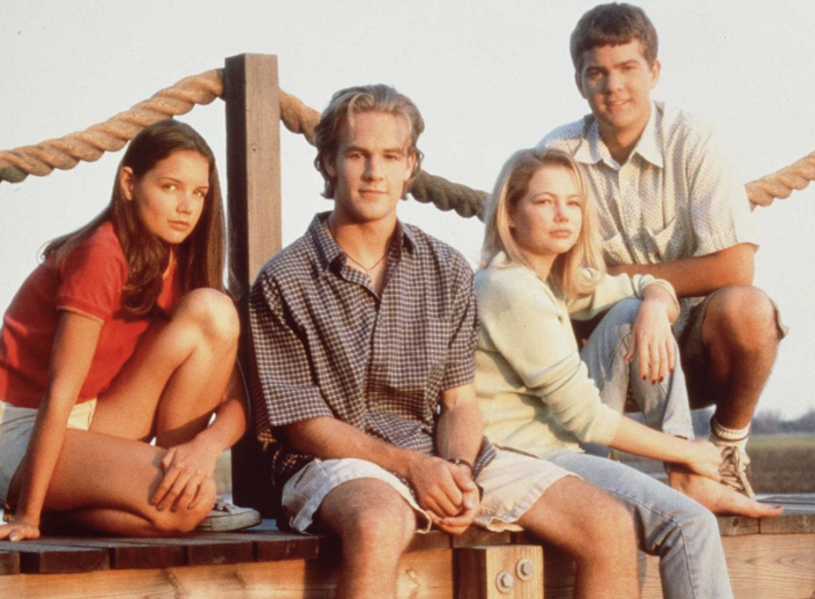
James Van Der Beek was synonymous with the anxieties and romances of teenage life for an entire generation. When he passed away this week at age 48 after battling colorectal cancer, fans assumed the star of such a massive global hit would leave behind a fortune. The reality was heartbreakingly different. In his final months, the actor faced mounting medical bills and an inability to work that drained his resources.
It turns out that starring in a cultural phenomenon does not guarantee financial security.
In a candid interview from 2012 that has resurfaced following his death, Van Der Beek admitted that he received almost nothing from the show’s long tail of success. He explained that he was only 20 years old when he signed the deal. He lacked the leverage or industry knowledge to secure a contract that would pay out when the show entered syndication.
This lack of passive income forced him to keep working constantly to support his wife, Kimberly, and their six children. He told reporters years ago that when the money from the initial run ran out, he had to buckle down immediately. There was no safety net waiting for him in the mailbox.
How the Network Loophole Worked
To understand how the lead actor of a six-season hit show could end up with zero residual money, you have to look at the television landscape of the late 1990s. Rachel True, an actress who appeared in the series, recently shed light on the specific mechanics that disadvantaged actors like Van Der Beek.
She explained that shows not airing on the “Big Three” networks of ABC, CBS, or NBC operated under different union rules. “Dawson’s Creek” aired on The WB. At the time, this was considered a fledgling network.
Because the network was smaller, the contracts often categorized the shows as already syndicated.
This technicality allowed the studios to bypass the traditional residual structures that make actors on shows like “Friends” or “Seinfeld” rich for life. In a standard major network deal, actors receive a check every time an episode re-airs. For Van Der Beek, those checks simply never came.
Here is a breakdown of how the network tier system likely affected his earnings:
| Network Type | Standard Residual Model | The WB / UPN Model (Late 90s) |
|---|---|---|
| Big Three (ABC, CBS, NBC) | High payout for every rerun | Standard union rates apply |
| Netlets (WB, CW) | Significantly lower or non-existent | Often treated as “syndicated” upfront |
| Streaming (Modern) | Flat fees or buyout models | Minimal long-term backend |
Rachel True noted that this system cheated actors out of their deserved financial security and proper legacy. While the studio continued to profit from licensing the show to streaming platforms and international markets, the face of the franchise was left behind.
Fighting for Family Until the End
The financial strain became acute when Van Der Beek was diagnosed with cancer. The disease stripped away his ability to take on new roles, which was his only source of income. Without the cushion of residuals, the family finances reached a critical point quickly.
Van Der Beek was forced to auction off his own career memorabilia to pay for cancer treatments.
This tragic detail highlights the severity of his situation. He sold personal items from his time on “Dawson’s Creek” not for charity, but to cover his own medical costs. It is a stark contrast to the image of the wealthy Hollywood elite that many fans hold.
Despite these hardships, he remained focused on his family. He often spoke about how the realization that the money was gone forced him to mature. He could not just sit back and coast on his early success. This drive led him to reinvent himself in comedy roles later in his career, such as his self-parody in “Don’t Trust the B—- in Apartment 23.”
Hollywood Steps Up to Help
The revelation of the family’s uncertain future has triggered a massive outpouring of support. A GoFundMe page established by close friends explicitly stated that the family is facing a difficult road ahead. The campaign goal was smashed in a matter of hours as fans and colleagues rushed to help.
The fund has already raised nearly $2 million. This money will provide a vital lifeline for Kimberly and the six children who have lost their primary provider. It is not just fans donating small amounts. Major Hollywood figures have contributed thousands of dollars to ensure the family stays afloat.
Some of the notable names rallying behind the family include:
- Zoe Saldaña: The A-list actress contributed significantly to the fund.
- Jon M. Chu: The “Wicked” director offered his support.
- Derek Hough: The “Dancing With the Stars” personality joined the effort.
- Bethenny Frankel: The reality star has used her platform to raise awareness.
The comment sections on social media are filled with outrage. Fans are calling the lack of residuals “terrible” and demanding that streaming platforms and studios retroactively fix these disparities. While that is unlikely to happen, the immediate support proves that while the industry may have failed Van Der Beek, his community has not.
Ultimately, James Van Der Beek leaves behind a complex legacy. He was a television icon who defined an era of pop culture. Yet, he also serves as a cautionary tale about the business of entertainment. His story is a reminder that fame does not always equal fortune, and that even the brightest stars can be vulnerable when the cameras stop rolling.
What do you think about the way actors are paid for reruns? Do you think studios should change these old contracts? Share your thoughts in the comments below and share this story with your friends on social media.